
|
 |
 | | | | | | ||||||||||||||||||||||||||||||||||||||||||||||||||||||||||||||||||||||||||||||||||||||||||||||||||||||||||||||||||||||||||||||||||||||||||||||||||||||||||||||||||||||||||||||||
| | | You are in: Health | ||||||||||||||||||||||||||||||||||||||||||||||||||||||||||||||||||||||||||||||||||||||||||||||||||||||||||||||||||||||||||||||||||||||||||||||||||||||||||||||||||||||||||||||||||
|
| | Monday, 21 October, 2002, 05:56 GMT 06:56 UK Cancer map reveals under-funding 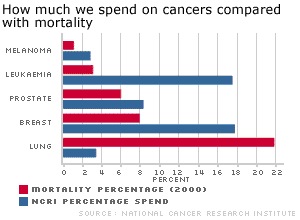 Some of the UK's biggest cancer killers get only a fraction of the funding they deserve, a new "map" of research spending reveals. The National Cancer Research Institute has produced the first ever comprehensive breakdown of cancer research in the UK. It is hoping that the database will stop research money from different funding bodies being wasted on the same type of project. However, the research has revealed that some cancers which cause relatively few fatalities fare much better in funding terms than others responsible for thousands of deaths each year. Lung loss The prime example is lung cancer - the cancer which kills the most people in the UK each year. It gets only 3% of the available funding in the UK - but accounted for 22% of the total deaths from cancer in 2000.
Breast cancer also attracts almost 18% of the available money, and is responsible for approximately 8% of the deaths. Other hard-to-treat cancers such as pancreas and stomach also attract far less funding than their high death rate seems to demand. Dr Liam O'Toole, the NCRI's director, said that the map would inform future decisions on research funding. He said: "At last we have a clear map of cancer research in the UK. "Armed with this we can see where we are at the moment and we can start to plan better where we want to get to in the future, in order to provide the new diagnostic tools and treatments that we still so badly need in many cancers." Biggest funders The institute pooled research figures from the 15 largest cancer research funding organisations, including Cancer Research UK, the Department of Health and the Medical Research Council. Even this does not give a totally reliable figure for the total spent in the UK on cancer research. A collective annual estimate is in the region of �350m. More than a fifth of the spending goes into research into treatment, 16% on studies into the possible causes of cancers, while early detection and diagnosis research takes 8%. However, research into cancer prevention takes only 2% of the total. Professor Mike Richards, the government's National Cancer Director, said: "For the first time, we have a very useful overview of cancer research in this country. "Now we will be working together to address the gaps." New approach needed Dame Gill Oliver, of the charity Macmillan Cancer Relief, welcomed the new inititiave. However, she said: "There needs to be a shift in emphasis in cancer research to involve patients in both setting the research questions and finding out the answers. "Randomised controlled trials are not always the best way to find out about what makes a patient feel better. "We also need to use qualitative research and patient led observational studies." Sir Paul Nurse, director general of the charity Cancer Research UK, described the map as a milestone. "The report enables the research community to identify where there are spending shortfalls across the UK and plan for the future. "Its publication is particularly timely because at the end of this month our top 300 scientists will be meeting to discuss Cancer Research UK's research strategy for the next five years and the report�s findings will inform this planning process. "However, identifying potential gaps is very complicated and not simply a case of comparing the incidence or mortality of a cancer type with current spend. "For example, research into the basic understanding of breast cancer will provide insights into a range of other cancer types as well." | |
See also:  10 Oct 02 | Health 04 Jun 02 | Health 05 Jun 02 | Health 23 Oct 01 | Health Internet links: The BBC is not responsible for the content of external internet sites Top Health stories now: Links to more Health stories are at the foot of the page. | ||||||||||||||||||||||||||||||||||||||||||||||||||||||||||||||||||||||||||||||||||||||||||||||||||||||||||||||||||||||||||||||||||||||||||||||||||||||||||||||||||||||||||||||||
| |
|  E-mail this story to a friend E-mail this story to a friend |
| |
| Links to more Health stories |
| | | ||
 | ||||
 | | Back to top
| ||
| ---------------------------------------------------------------------------------- To BBC Sport>> | To BBC Weather>> | To BBC World Service>> ---------------------------------------------------------------------------------- © MMIII | News Sources | Privacy |






