
|
 |
 | | | | | | ||||||||||||||||||||||||||||||||||||||||||||||||||||||||||||||||||||||||||||||||||||||||||||||||||||||||||||||||||||||||||||||||||||||||
| | | You are in: Health | ||||||||||||||||||||||||||||||||||||||||||||||||||||||||||||||||||||||||||||||||||||||||||||||||||||||||||||||||||||||||||||||||||||||||||
|
| | Thursday, 10 October, 2002, 14:53 GMT 15:53 UK Baby food meat risk probed 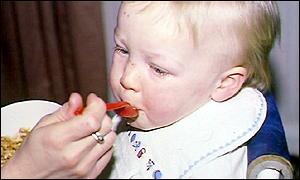 Baby food may have been contaminated, said the report A survey has failed to rule out the chance that "mechanically recovered meat" - which may carry a higher CJD risk - may have ended up in baby food during the 1980s and early 1990s.
Mechanically recovered meat (MRM) involves flesh left on the carcass after all the normal cuts of meat have been removed. A high-pressure jet is used to blast these from the bones, and the resulting filtered slurry is sold on - for a fraction of the price of genuine cuts. The practice was banned except for pork butchery in 1995 as the potential threat of BSE to humans became apparent. This was coupled with an extensive slaughter programme involving cattle aged over 30 months. Evidence now suggests that the risk of any UK-sourced BSE infected beef entering the food supply is virtually non-existent. Sir Peter Smith, the chairman of a group which advises the government of BSE and vCJD, told BBC News Online that consumers should no longer be worried about eating products which, in the 1980s and 1990s might have contained MRMs. He said: "If you were eating cheap meat products during the relevant periods, you were potentially exposed to the BSE agent." He said it "remained a possibility" that some MRM may have found its way into baby food. Money-saving Experts need to know about past practices in order to get an idea of the level of risk to which the British public were exposed during past two decades. The agency questionned dozens of people who worked in the meat industry 20 years ago to try to obtain a clearer picture of how much MRM was produced - and where it was used. The study confirms an overall figure of approximately 5,000 tonnes of beef MRM annually - used mainly in catering and "economy" foods. It was not used in burgers from fast food outlets, says the report. It confirms the suspicion that a significant proportion of the MRM was used by firms catering for schools and hospitals. Conflicting evidence On the question of baby foods, however, the evidence from meat workers was contradictory - while some said MRM was never an ingredient, others said they recollected that it was. The report says: "Some baby foods may have contained MRM but information was not conclusive. "The major producers of baby food claimed not to have used MRM due to concerns about bone fragments." While major firms denied any use of MRM, at least one meat worker interviewed by the FSA said that "gentler" methods of mechanical extraction had been used to reduce the chance of bone fragments. The agency worked closely with the meat industry's trade associations - the National Federation of Meat and Food Traders and the British Meat Manufacturing Association - to complete the survey. The industry had previously faced claims that it had failed to cooperate with investigators seeking information on abbatoir and manufacturing practices at the height of the BSE epidemic. Some campaigners are calling for greater government action to try to track risk from MRM. Sheila McKechnie, the director, Consumers' Association, said: "Today's findings are deeply shocking, as is the FSA's attempt to brush the issue under the carpet by labelling the risk as irrelevant to today's consumers. "This is highly misleading and irresponsible. MRM is a known source of BSE infectivity and exposure to high levels is linked to the possibility of developing vCJD." However, Sir Peter told BBC News Online: "I would doubt the feasability of any efforts to trace and offer counselling to the very large number of people who may have been at high risk of exposure. "And there is nothing we can actually offer them in way of treatment at the moment." | | See also:  20 Oct 01 | Health 09 Aug 01 | Health 09 Aug 01 | UK 09 Aug 01 | Health Internet links: The BBC is not responsible for the content of external internet sites Top Health stories now: Links to more Health stories are at the foot of the page. | ||||||||||||||||||||||||||||||||||||||||||||||||||||||||||||||||||||||||||||||||||||||||||||||||||||||||||||||||||||||||||||||||||||||||
| |
|  E-mail this story to a friend E-mail this story to a friend |
| |
| Links to more Health stories |
| | | ||
 | ||||
 | | Back to top
| ||
| ---------------------------------------------------------------------------------- To BBC Sport>> | To BBC Weather>> | To BBC World Service>> ---------------------------------------------------------------------------------- © MMIII | News Sources | Privacy |



