
|
 |
 | | | | | | ||||||||||||||||||||||||||||||||||||||||||||||||||||||||||||||||||||||||||||||||||||||||||||||||||||||||||||||||||||||||||||||||||||||||
| | | You are in: Health | ||||||||||||||||||||||||||||||||||||||||||||||||||||||||||||||||||||||||||||||||||||||||||||||||||||||||||||||||||||||||||||||||||||||||||
|
| | Tuesday, 1 October, 2002, 23:19 GMT 00:19 UK Lung cancer breakthrough 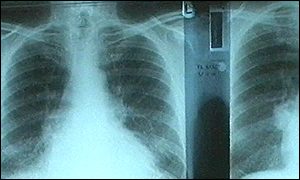 Small cell lung cancer is very difficult to treat Scientists say they have discovered how a severe form of lung cancer spreads. Researchers at Hammersmith Hospital and Imperial College London have identified a single molecule which causes small cell lung cancer to attack the body. The scientists believe their discovery could help in the development of new drugs to fight the condition.
It kills 97% of patients within five years of diagnosis and is notoriously difficult to treat because it is resistant to chemotherapy. Key role But Professor Michael Seckl and colleagues at Hammersmith Hospital found that a molecule which is part of the PI3Ks (phosphoinositide 3-kinase) family plays a key role in enabling the disease to spread. They discovered that the molecule influences several growth factor signals which cause cancer cells to spread and divide. The scientists found that in small lung cancer cells, compared to normal lung tissue, there was too much of the molecule. Until now, the role of this molecule has not been understood. This discovery could lead to new drugs or gene therapies to specifically target the molecule and prevent its growth. Professor Seckl said: "This is an important discovery that will help us in working towards a treatment that targets and destroys the molecule, and in so doing, stops cancer of the lung growing. "Unusually, small cell lung cancer is particularly aggressive, growing in response to many growth factors. "Growth factors latch on to tiny receptors on the outside of a cell, setting off a series of signals to the cell's nucleus instructing it to grow and divide. "Targeting individual growth factors is unlikely to lead to a successful therapy as the other growth factors may take over. "However, identifying a common single molecule - within each cancer cell - which allows the different growth factors to work in this way is an important step forwards." New treatments Professor Seckl said the discovery could help many patients with the disease. "Small cell lung cancer kills 97% of patients within five years of diagnosis and we are desperate to identify new therapies. "Discovering what this molecule does is a major step towards developing treatment that targets it directly and may help future generations of patients." Details of the study, which is part-funded by Cancer Research UK, is published in the Journal of the European Molecular Biology Organisation. | | See also:  09 Mar 99 | Medical notes 26 Jun 02 | Health 04 Jun 02 | Health Internet links: The BBC is not responsible for the content of external internet sites Top Health stories now: Links to more Health stories are at the foot of the page. | ||||||||||||||||||||||||||||||||||||||||||||||||||||||||||||||||||||||||||||||||||||||||||||||||||||||||||||||||||||||||||||||||||||||||
| |
|  E-mail this story to a friend E-mail this story to a friend |
| |
| Links to more Health stories |
| | | ||
 | ||||
 | | Back to top
| ||
| ---------------------------------------------------------------------------------- To BBC Sport>> | To BBC Weather>> | To BBC World Service>> ---------------------------------------------------------------------------------- © MMIII | News Sources | Privacy |





