
|
 |
 | | | | | | ||||||||||||||||||||||||||||||||||||||||||||||||||||||||||||||||||||||||||||||||||||||||||||||||||||||||||||||||||||||||||||||||||||||||||
| | | You are in: Health | ||||||||||||||||||||||||||||||||||||||||||||||||||||||||||||||||||||||||||||||||||||||||||||||||||||||||||||||||||||||||||||||||||||||||||||
|
| | Tuesday, 17 September, 2002, 23:14 GMT 00:14 UK Self-defence classes for GPs 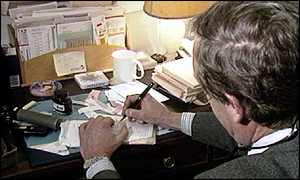 GPs say there is an 'ever-present' risk GP Dr Ian Brooman was in his surgery one afternoon when a paranoid schizophrenic walked in and stabbed him between the shoulder blades. This sort of life-threatening incident is rare, but it is estimated that one in four GPs has been abused, threatened or injured at work. Now doctors are being offered self-defence tuition to help them deal with difficult patients. Dr Brooman, a GP in Swanley, Kent, was stabbed in February 2000 by patient Matthew Richards.
Dr Brooman, who returned to work as soon as he recovered, welcomed self-defence help for GPs. "Anything which helps anger management is of use for family doctors who sometimes find themselves vulnerable," he said. Dr Fred MacSorley, a GP in Lurgan, Northern Ireland, devised the self-defence tuition. He told BBC News Online it was important for doctors to be able to defuse a potentially violent situation and arrange the layout of their surgery to reduce the risk of attack. Avoidance Dr MacSorley, who will present his work to the Royal Society of Medicine's Annual GP Forum in London on Thursday, told BBC News Online: "Northern Ireland statistics show it's the safest place for GPs to work. "But we do find that there's a lot more verbal abuse from patients." Dr MacSorley said he devised the self-defence classes because there seemed to be nothing available to advise doctors on how to protect themselves and their staff. "The message is avoidance, to recognise the signs of impending violence in people, recognise their verbal cues, body language."
In the self-defence class, doctors are also taught how to extricate themselves if patients do physically attack them. Dr MacSorley has also been subjected to violence. He was hit on the head while in his car on a visit to a patient and by intruders to his surgery. "That was a very unpleasant incident because I had two people attacking me," he said, "I was OK, but what if I was a 65-year-old GP?" He added: "Unfortunately, society is not as tolerant of delays and difficulties in the NHS as it once was." Family threat Dr Laurence Buckman, a negotiator for the British Medical Association's GPs committee, said: "I think self-defence classes are essential. "Violence is an ever-present problem. Every year, some GPs are injured or killed by people who are violent." Only two weeks ago, Dr Buckman was threatened by a patient who said he would kill the GP's wife and children. He said: "Most violent patients are people with a mental illness, or they misuse alcohol or drugs. "But sometimes, as with this guy two weeks ago, violence doesn't come from an expected source." In March this year, the BMA warned family doctors were not being adequately protected. It said only a quarter of health authorities had implemented a policy of zero tolerance against violent patients, where the most violent could be seen at a police station. | | See also:  05 Sep 02 | Health 03 Oct 00 | Health 17 Mar 00 | Health 11 Aug 00 | Health 20 Dec 99 | Health Internet links: The BBC is not responsible for the content of external internet sites Top Health stories now: Links to more Health stories are at the foot of the page. | ||||||||||||||||||||||||||||||||||||||||||||||||||||||||||||||||||||||||||||||||||||||||||||||||||||||||||||||||||||||||||||||||||||||||||
| |
|  E-mail this story to a friend E-mail this story to a friend |
| |
| Links to more Health stories |
| | | ||
 | ||||
 | | Back to top
| ||
| ---------------------------------------------------------------------------------- To BBC Sport>> | To BBC Weather>> | To BBC World Service>> ---------------------------------------------------------------------------------- © MMIII | News Sources | Privacy |





