
|
 |
 | | | | | | ||||||||||||||||||||||||||||||||||||||||||||||||||||||||||||||||||||||||||||||||||||||||||||||||||||||||||||||||||||||||||||||||||||||||
| | | You are in: Health | ||||||||||||||||||||||||||||||||||||||||||||||||||||||||||||||||||||||||||||||||||||||||||||||||||||||||||||||||||||||||||||||||||||||||||
|
| | Tuesday, 10 September, 2002, 23:03 GMT 00:03 UK Warning over killer flu strains 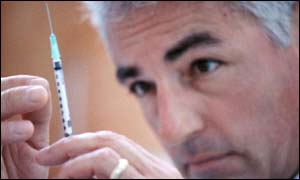 An annual vaccine can protect against flu The need for tight monitoring of the flu virus so any deadly strains are spotted early has been highlighted by scientists. Experts told the Public Health Laboratory Service annual conference that the flu virus mutates easily and must be watched carefully. They said spotting a deadly strain early would help to save thousands of lives and could allow vulnerable people to be vaccinated.
Dr Maria Zambon, head of the respiratory virus unit at the PHLS Central Public Health Laboratory in Colindale, told the conference that most people will have immunity to the new strain. Since the late 1970s, two strains of influenza A virus have been circulating in humans, and these are known as H1N1 and H3N2. The new strain arose because the two existing viruses recombined to form a new one, an H1N2 virus. Natural immunity However, because the genetic make-up is similar to the previous strains most people will be naturally protected from it. Dr Zambon said: "This means that although the virus is new to humans, it is genetically very similar to the viruses which have been circulating over the last 30 years or so. "The general population therefore has good levels of immunity to this new strain, and crucially the vaccine which was in use last year provided protection against it." But Dr Zambon said the emergence of the new strain highlighted the need to be vigilant. "It is a timely reminder of how easily the flu virus mutates and changes its character. "It is vital that we maintain good surveillance of flu at a national and a global level, so that if new strains which pose a more serious threat arise, we can recognise them early and start to put measures in place to tackle them, such as developing appropriate vaccines." Major outbreaks The last major outbreak of flu in the UK occurred in the 1970s. A large proportion of the population did not have immunity to this strain of the virus because it had last appeared in the 1950s. If a similar outbreak occurred again it could affect millions of people. Dr Alan Hay, director of the World Health Organization influenza centre at the National Institute for Medical Research in London, said it was important that current viruses are carefully monitored. "There is a continuing risk that something will happen and that is why it is very important that we keep our eyes open," he told BBC News Online. | | See also:  02 Dec 01 | Health 06 Sep 01 | Health 18 Aug 98 | Health Internet links: The BBC is not responsible for the content of external internet sites Top Health stories now: Links to more Health stories are at the foot of the page. | ||||||||||||||||||||||||||||||||||||||||||||||||||||||||||||||||||||||||||||||||||||||||||||||||||||||||||||||||||||||||||||||||||||||||
| |
|  E-mail this story to a friend E-mail this story to a friend |
| |
| Links to more Health stories |
| | | ||
 | ||||
 | | Back to top
| ||
| ---------------------------------------------------------------------------------- To BBC Sport>> | To BBC Weather>> | To BBC World Service>> ---------------------------------------------------------------------------------- © MMIII | News Sources | Privacy |





