
|
 |
 | | | | | | ||||||||||||||||||||||||||||||||||||||||||||||||||||||||||||||||||||||||||||||||||||||||||||||||||||||||||||||||||||||||||||||||||||||||
| | | You are in: Health | ||||||||||||||||||||||||||||||||||||||||||||||||||||||||||||||||||||||||||||||||||||||||||||||||||||||||||||||||||||||||||||||||||||||||||
|
| | Monday, 9 September, 2002, 00:18 GMT 01:18 UK Hearing clinic helps thousands 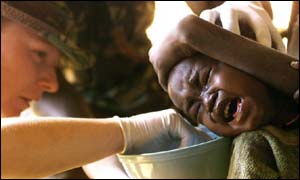 Wax is a major cause of deafness in Africa A new hearing clinic in the Ghanaian city of Kumasi is helping to transform the lives of thousands of people both inside and outside the country's borders. The Kumasi Hearing Assessment Centre is providing hearing aids and treatment to 150 patients a day, with some patients travelling from as far away as Nigeria for care. The clinic aims to tackle the high rates of people who are deaf in Ghana. An estimated 1% of the population has hearing problems of some kind while 6% of all school children are believed to have difficulties.
"People come from all over this country, from north and south," says Dr Geoffrey Amadohfu, a clinical audiologist at the clinic. "We see people from Burkina Faso and Mali and even people from Nigeria. "The clinic is very busy. It can be very hectic and there is always pressure on staff. "We have modest equipment. We don't have the best but we are managing with the equipment we have. It is sometimes difficult but we are trying to cope with it." High rates Professor George Brobby, director of the centre, says the reasons for Ghana's high deafness rates are complex. "We have conducted research into the prevalence of deafness among children of preschool going age and we have come out with a very high prevalence of 1%. When you go into the schools about 6% of students have some sort of hearing impairment," he says. "Most of the causes of deafness are due to wax and ottis media (infection of the middle ear) which impairs their hearing. "But about two thirds of deafness is because children when they were born did not have enough oxygen and that can cause damage to the ears." The clinic provides a much needed service and is popular with patients. As one woman says: "I have confidence in the clinic. I know my child is going to get well." This story is featured in the radio programme Health Matters on the BBC World Service. Click here for listening times | | See also:  18 Oct 01 | Health 25 Mar 01 | Health 27 Feb 02 | Business Internet links: The BBC is not responsible for the content of external internet sites Top Health stories now: Links to more Health stories are at the foot of the page. | ||||||||||||||||||||||||||||||||||||||||||||||||||||||||||||||||||||||||||||||||||||||||||||||||||||||||||||||||||||||||||||||||||||||||
| |
|  E-mail this story to a friend E-mail this story to a friend |
| |
| Links to more Health stories |
| | | ||
 | ||||
 | | Back to top
| ||
| ---------------------------------------------------------------------------------- To BBC Sport>> | To BBC Weather>> | To BBC World Service>> ---------------------------------------------------------------------------------- © MMIII | News Sources | Privacy |





