|
 |
 | | | | | | ||||||||||||||||||||||||||||||||||||||||||||||||||||||||||||||||||||||||||||||||||||||||||||||||||||||||||||||||||||||||||||||||||||||||
| | | You are in: Health | ||||||||||||||||||||||||||||||||||||||||||||||||||||||||||||||||||||||||||||||||||||||||||||||||||||||||||||||||||||||||||||||||||||||||||
|
| | Monday, 2 September, 2002, 23:19 GMT 00:19 UK Breast milk leads to healthy heart 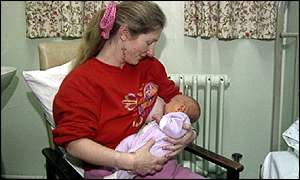 Breastfeeding protects mothers' health, says research Breast feeding may be good for the long-term cardiovascular health of a child, a study suggests. The researchers say their findings may have implications for the content of formula feed milks.
It is linked to number of factors, including diet, obesity and exercise. But there is growing evidence that the risk of coronary heart disease begins to emerge before adulthood - which suggests a baby's diet may play a crucial role. Comparison A team from St George's Hospital Medical School in south London compared infants, children, adolescents and adults who had been breast fed with those who had received formula milk. The results suggest that breast feeding has different effects on cholesterol at different stages of life. Breast feeding seems to be associated with high levels of cholesterol in infancy, but there is no relation between infant feeding and cholesterol in childhood and adolescence. However, in adults, cholesterol levels appear to be lower in those who had been breast-fed compared to those who were formula fed. Researcher Dr Christopher Owen said: "The possibility that infant feeding has long-term effects on blood cholesterol levels is of considerable public health importance. "Early exposure to the high cholesterol content of breast milk may improve fat metabolism in later life. "In which case, there may be a strong argument for the content of formula feeds to match that of human milk." Genetic conditions Alison Shaw, a cardiac nurse at the British Heart Foundation, said other factors such as genetic conditions might influence cholesterol levels. "Although the study shows people may have lower cholesterol levels in later life if they are breast fed when compared to bottle feeding, further research is needed to ascertain exactly what causes this difference and how this may relate to other risk factors. "Until then, people can reduce their risks of developing coronary heart disease by lowering their cholesterol level through reducing the amount of saturated fat in their diet, and increasing their levels of physical activity." Research published last year by the Institute of Child Health at Great Ormond Street Hospital, London, found that premature babies fed with breast milk are less likely to suffer from potentially life-threatening high blood pressure in later life. However, another study found that prolonged breast feeding could increase the risk of heart disease by leading to stiffening of the arteries. The research is published in the journal Pediatrics. | | See also:  19 Jul 02 | Health 07 Jul 02 | Health 06 Jun 02 | Health 21 May 02 | Health Internet links: The BBC is not responsible for the content of external internet sites Top Health stories now: Links to more Health stories are at the foot of the page. | ||||||||||||||||||||||||||||||||||||||||||||||||||||||||||||||||||||||||||||||||||||||||||||||||||||||||||||||||||||||||||||||||||||||||
| |
|  E-mail this story to a friend E-mail this story to a friend |
| |
| Links to more Health stories |
| | | ||
 | ||||
 | | Back to top
| ||
| ---------------------------------------------------------------------------------- To BBC Sport>> | To BBC Weather>> | To BBC World Service>> ---------------------------------------------------------------------------------- © MMIII | News Sources | Privacy |