
|
 |
 | | | | | | ||||||||||||||||||||||||||||||||||||||||||||||||||||||||||||||||||||||||||||||||||||||||||||||||||||||||||||||||||||||||||||||||||||||
| | | You are in: Health | ||||||||||||||||||||||||||||||||||||||||||||||||||||||||||||||||||||||||||||||||||||||||||||||||||||||||||||||||||||||||||||||||||||||||
|
| | Saturday, 31 August, 2002, 23:15 GMT 00:15 UK Warming link to cholera outbreaks 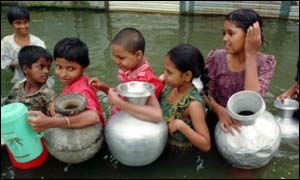 Cholera is epidemic in Bangladesh Scientists comparing weather patterns with levels of cholera have found that the levels increase during the El Nino phenomenon. And the effect is getting stronger, they say, suggesting that climate change in recent years is having an effect. The work is based on Bangladesh, where there is the clearest association between weather and disease levels - but scientists are hopeful that in future, they will be able to predict epidemics far more accurately. The so-called El Nino Southern Oscillation (ENSO) happens approximately once every four years. Warm waters El Nino is a warming of water temperatures in the eastern Pacific Ocean which has a knock-on effect on weather patterns across large areas of the globe. It can often bring disruptive weather - the 1997 to 1998 El Nino caused the disappearance of the monsoon in southeast Asia, and severe flooding in East Africa. Scientists do not yet understand what drives this four-year cycle. However, a team of researchers is now convinced that, particularly in recent decades, the arrival of ENSO also heralds an increase in cholera cases in Bangladesh. This diarrhoeal disease is a leading cause of death in the country. Strong links The researchers, from the universities of Barcelona and Michigan, US, joining forces with others in Dhaka, Bangladesh, looked at weather patterns from 1893 onwards. They found only weak links between El Nino and recorded cholera outbreaks up to 1980, but in the past two decades, the association has been "strong and consistent". "This climate phenomenon accounts for over 70% of disease variance," they wrote. Dr Jonathan Patz, from Johns Hopkins University in Baltmore, said that the study probably represented the first evidence that "warming trends" over the last century were affecting human disease. Experts say it is hard to predict the severity of outbreaks of diseases such as malaria and cholera, because there are so many other factors apart from rainfall and temperature which might be having an influence. However, experts say that in future, efforts to look ahead might be more successful. Dr Menna Bouma, of the London School of Hygiene, told BBC News Online: "If you know that you are going to have an increased risk of disease, you can at least make sure that your systems are in place for dealing with that. "Those sort of preparations save lives." | | See also:  18 May 98 | Europe 25 Jan 01 | Science/Nature 10 Jul 01 | Asia-Pacific 20 Jul 01 | Health Internet links: The BBC is not responsible for the content of external internet sites Top Health stories now: Links to more Health stories are at the foot of the page. | ||||||||||||||||||||||||||||||||||||||||||||||||||||||||||||||||||||||||||||||||||||||||||||||||||||||||||||||||||||||||||||||||||||||
| |
|  E-mail this story to a friend E-mail this story to a friend |
| |
| Links to more Health stories |
| | | ||
 | ||||
 | | Back to top
| ||
| ---------------------------------------------------------------------------------- To BBC Sport>> | To BBC Weather>> | To BBC World Service>> ---------------------------------------------------------------------------------- © MMIII | News Sources | Privacy |



