
|
 |
 | | | | | | ||||||||||||||||||||||||||||||||||||||||||||||||||||||||||||||||||||||||||||||||||||||||||||||||||||||||||||||||||||||||||||||||||||||||
| | | You are in: Health | ||||||||||||||||||||||||||||||||||||||||||||||||||||||||||||||||||||||||||||||||||||||||||||||||||||||||||||||||||||||||||||||||||||||||||
|
| | Friday, 16 August, 2002, 22:55 GMT 23:55 UK Gene link to smoking risk 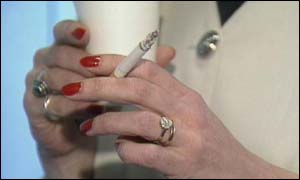 Women are advised not to smoke while pregnant Certain children appear to be particularly vulnerable to health problems if their mother smoked during their pregnancy. Scientists in the United States have found that some children carry a gene that makes them more susceptible to breathing problems if they had been exposed to smoke in the womb. Their study of almost 3,000 children found those with variations in a gene called GSTM1 were much more likely to suffer from asthma and wheezing if their mothers smoked during pregnancy.
Scientists at Keck School of Medicine at the University of Southern California examined the health of 2,950 school children across the state. DNA tests They also collected cell samples from the mouth of each child and analysed their DNA. They asked parents if the mother smoked while pregnant with the child. They looked for a variation in the gene GSTM1. This gene is responsible for creating proteins which enable the lungs to rid themselves of pollutants, including tobacco smoke. However, it occurs in two forms - either present or what scientists describe as null. Children born with two of the null form of the gene cannot produce the protective proteins or enzymes to protect the lungs. Of those in the study, 45% had this variation of the gene. More than 16% of the children in the study had mothers who had smoked during their pregnancy. When the scientists examined those with two of the null form of the gene they found they suffered from a variety of breathing problems. They found that they were almost four times more likely to have visited hospital in the past year with breathing difficulties. They were twice as likely to be taking medication to control wheezing and were more likely to suffer wheezing after exercise. They also had a 70% increased risk of having asthma. Further evidence Professor Gilliland said the findings provided further evidence that smoking during pregnancy harmed children. "This study illustrates that experiences during the period in the womb are very important for long term health, especially among genetically susceptible children and emphasise the importance of pregnant women not smoking," he said. "Exposure to smoke in the womb for certain genetically susceptible children may have long-term health effects." He added: "Maternal smoking is common and the null genotype is found in nearly half of the population, so this high risk group might be an important population to target for prevention." More research Professor Richard Trembath of Leicester University welcomed the study. "We know variations in these kinds of genes will have an impact on our vulnerability to various types of disease," he said. "This is not a new gene that has been discovered but it is new problem." But he added: "This is an interesting observation but further study is needed." | | See also:  26 Jul 02 | Health 04 Jan 02 | Health 03 Jul 02 | Health 21 Mar 00 | Health Internet links: The BBC is not responsible for the content of external internet sites Top Health stories now: Links to more Health stories are at the foot of the page. | ||||||||||||||||||||||||||||||||||||||||||||||||||||||||||||||||||||||||||||||||||||||||||||||||||||||||||||||||||||||||||||||||||||||||
| |
|  E-mail this story to a friend E-mail this story to a friend |
| |
| Links to more Health stories |
| | | ||
 | ||||
 | | Back to top
| ||
| ---------------------------------------------------------------------------------- To BBC Sport>> | To BBC Weather>> | To BBC World Service>> ---------------------------------------------------------------------------------- © MMIII | News Sources | Privacy |





