
|
 |
 | | | | | | ||||||||||||||||||||||||||||||||||||||||||||||||||||||||||||||||||||||||||||||||||||||||||||||||||||||||||||||||||||||||||||||||||||||
| | | You are in: Health | ||||||||||||||||||||||||||||||||||||||||||||||||||||||||||||||||||||||||||||||||||||||||||||||||||||||||||||||||||||||||||||||||||||||||
|
| | Sunday, 25 August, 2002, 23:07 GMT 00:07 UK Birthmark laser method 'ineffective' 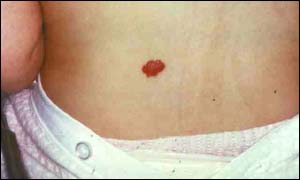 Small birthmarks like this may disappear on their own Using a laser to treat "strawberry birthmarks" in babies is, in most cases, no more effective than simply leaving it alone, say doctors. Many such birthmarks, called haemangiomas, more or less disappear on their own, and results using the laser are no better. Parents who come asking for such treatment should be discouraged, researchers conclude. However, experts say that some larger growths should still be tackled. Approximately one in 10 children born in the UK will have some kind of haemangioma. They are caused by the growth of large numbers of excess blood vessels near the surface of the skin, giving the appearance of a bright red patch. However, if left alone, 70% will gradually fade away, with a third vanishing altogether and many leaving only a faint mark. The bigger birthmarks may either stay the same, or leave permanent skin changes underneath. Laser light The laser works by operating at the same wavelength as the molecule haemoglobin - found in every red blood cell in the body. This will heat up the blood cells and damage surrounding blood vessel walls. Because the haemangioma is a mass of blood vessels, a succession of laser treatments will destroy it. A team of researchers from the Birmingham Children's Hospital looked at whether it was worthwhile to attempt to treat haemangiomas in young children before they had been given the opportunity to fade. They looked at 121 children aged between one and 14 weeks. Some were laser-treated, while others were simply left alone in a "wait and see" policy. After a year, the number of children whose birthmarks had either faded away entirely or almost entirely was much the same in both groups. Lasting damage However, children treated by laser were more likely to have left-over effects such as skin atrophy and pigmentation changes. The number of children whose parents still considered the mark a problem was also similar. Mr Iain Mackay is a surgeon specialising in Laser treatment at the Canniesburn Hospital in Glasgow. He said while a few surgeons had been using this technique on young babies, this should stop now this study had been published. He said: "This technique is useful for other birthmarks, such as port wine stains, but we do not use it on infants with haemangiomas unless it is a particularly large one or is interfering with the mouth. "In general, they tend to stop growing and then contract." | | See also:  22 Feb 02 | England 04 Dec 98 | Health 10 Jul 02 | Health Internet links: The BBC is not responsible for the content of external internet sites Top Health stories now: Links to more Health stories are at the foot of the page. | ||||||||||||||||||||||||||||||||||||||||||||||||||||||||||||||||||||||||||||||||||||||||||||||||||||||||||||||||||||||||||||||||||||||
| |
|  E-mail this story to a friend E-mail this story to a friend |
| |
| Links to more Health stories |
| | | ||
 | ||||
 | | Back to top
| ||
| ---------------------------------------------------------------------------------- To BBC Sport>> | To BBC Weather>> | To BBC World Service>> ---------------------------------------------------------------------------------- © MMIII | News Sources | Privacy |



