|
 |
 | | | | | | |||||||||||||||||||||||||||||||||||||||||||||||||||||||||||||||||||||||||||||||||||||||||||||||||||||||||||||||||||||||||||||||||||||||||||||||||||||||||||||||||||||||||||||||||
| | | You are in: Health | |||||||||||||||||||||||||||||||||||||||||||||||||||||||||||||||||||||||||||||||||||||||||||||||||||||||||||||||||||||||||||||||||||||||||||||||||||||||||||||||||||||||||||||||||||
|
| | Friday, 16 August, 2002, 11:52 GMT 12:52 UK More patients to have day operations 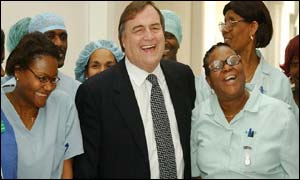 Mr Prescott announced the plans at a London hospital The NHS is to carry out an extra 120,000 operations a year as part of government plans to boost day surgery. The move will see more people undergoing operations for a range of conditions, including breast cancer, without the need to stay overnight in hospital. The policy, which is costing �68m, is a key part of the government's campaign to reduce waiting times for operations to just six months by 2005.
Guidelines Mr Hutton published new guidelines for NHS hospitals outlining which conditions should be treated in day surgery units. They cover 17 different procedures, such as breast cancer and complex keyhole surgery. Advances in anaesthesia and surgical techniques mean that far more procedures can be carried out during the day without an overnight stay. The guidelines are aimed at stamping out variations in day surgery across the NHS.
A report by the Audit Commission published last year suggested thousands of extra patients could be treated each year if these variations were eliminated. The government is aiming for 75% of NHS operations to be carried out as day surgery cases. The policy should help to free up more hospital beds and reduces the risk of infections. Extra clinics Mr Hutton also announced 10 fast-track diagnosis and treatment centres to provide quick ophthalmology, orthopaedics and general surgery care. He said the centres will be able to treat an extra 25,000 extra cases a year. Money has also been made available to fund one-stop primary care centres, housing GPs, pharmacists, dentists, opticians, health visitors and social services staff. Mr Hutton said: "This programme of investment will enable doctors to perform more operations every year." He added: "Waiting times will be reduced. Patients will be the winners." Mr David Ralphs, president of the British Day Surgery Association, welcomed the move. "We definitely support this," he told BBC News Online. "It can be a major limb in the attack on NHS waiting lists." Dr Evan Harris MP, Liberal Democrat health spokesman, also supported the policy. But he added: "Day surgery units are a good idea for those who are eligible. They were a good idea five years ago, so it's a shame it has taken so long for them to be established." | |
See also:  23 Jan 02 | Health 15 Feb 01 | Health 16 May 02 | Health Internet links: The BBC is not responsible for the content of external internet sites Top Health stories now: Links to more Health stories are at the foot of the page. | |||||||||||||||||||||||||||||||||||||||||||||||||||||||||||||||||||||||||||||||||||||||||||||||||||||||||||||||||||||||||||||||||||||||||||||||||||||||||||||||||||||||||||||||||
| |
|  E-mail this story to a friend E-mail this story to a friend |
| |
| Links to more Health stories |
| | | ||
 | ||||
 | | Back to top
| ||
| ---------------------------------------------------------------------------------- To BBC Sport>> | To BBC Weather>> | To BBC World Service>> ---------------------------------------------------------------------------------- © MMIII | News Sources | Privacy |