
|
 |
 | | | | | | ||||||||||||||||||||||||||||||||||||||||||||||||||||||||||||||||||||||||||||||||||||||||||||||||||||||||||||||||||||||||||||||||||||||||
| | | You are in: Health | ||||||||||||||||||||||||||||||||||||||||||||||||||||||||||||||||||||||||||||||||||||||||||||||||||||||||||||||||||||||||||||||||||||||||||
|
| | Wednesday, 7 August, 2002, 17:58 GMT 18:58 UK A new type of false teeth 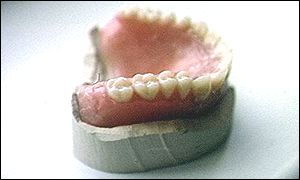 Dentures: soon to be a thing of the past? Dentures could one day be replaced by teeth grown in the laboratory. A British scientist has adapted the latest techniques in genetic engineering to grow immature mouse teeth from stem cells.
New Scientist magazine reports he is confident the developing tooth will attach its own nerve and blood supply and cement itself into the gum. He has already set up a firm, Odontis, to exploit the breakthrough. "The aim is you go along to your dentist, we take cells from you and engineer them," he said. "We replace them into the site you need the tooth and, hey presto, the tooth would grow." Within years Although the research is at a very early stage it may only be 10 years before dentists are giving people new teeth. Stem cells are the master cells of the body that have the capacity to develop into a wide range of body tissue. However, using them to create new teeth could be difficult as it would require the manufacture of several different types of tissue, including tough dentine and a thin outer layer of hard enamel. Despite this, the scientific community has already made rapid progress. Two years ago scientists at the National Institutes of Health near Washington DC showed that the tiny pulp chamber inside every tooth contains stem cells capable of becoming dentine-producing cells called odontoblasts. The scientists estimated that out of the millions of cells in a tooth's pulp chamber, about 80 will be stem cells. Another team at Texas University Dental School has discovered a source of the epithelial cells which give rise to enamel inside adult mouse teeth. When these cells are grown alongside dental pulp stem cells, dentine-enamel structures form. Professor Sharpe is using stem cells, but will not say which ones. By finding the right signalling molecules he has persuaded stem cells from adult mice to develop into tooth progenitor cells and immature teeth. He does not believe tooth development is too complex to emulate. "Yes, it's complicated, but we are letting the natural embryonic development pathways do the work for us." | | See also:  07 Aug 02 | Health 30 Apr 02 | Health 20 Jan 99 | Health Internet links: The BBC is not responsible for the content of external internet sites Top Health stories now: Links to more Health stories are at the foot of the page. | ||||||||||||||||||||||||||||||||||||||||||||||||||||||||||||||||||||||||||||||||||||||||||||||||||||||||||||||||||||||||||||||||||||||||
| |
|  E-mail this story to a friend E-mail this story to a friend |
| |
| Links to more Health stories |
| | | ||
 | ||||
 | | Back to top
| ||
| ---------------------------------------------------------------------------------- To BBC Sport>> | To BBC Weather>> | To BBC World Service>> ---------------------------------------------------------------------------------- © MMIII | News Sources | Privacy |





