
|
 |
 | | | | | | ||||||||||||||||||||||||||||||||||||||||||||||||||||||||||||||||||||||||||||||||||||||||||||||||||||||||||||||||||||||||||||||||||||||||||||||||||||||||||||||||||||||||
| | | You are in: Health | ||||||||||||||||||||||||||||||||||||||||||||||||||||||||||||||||||||||||||||||||||||||||||||||||||||||||||||||||||||||||||||||||||||||||||||||||||||||||||||||||||||||||||
|
| | Monday, 5 August, 2002, 23:45 GMT 00:45 UK Child cancer relapse risk predicted 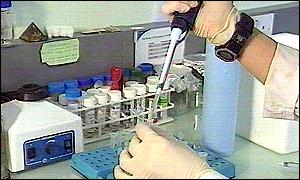 The test could sort who needs intensive chemotherapy A new screening test could help to revolutionise the way children with leukaemia are treated - by enabling doctors to fine-tune treatment to the needs of each individual patient. The test identifies which patients are most at risk of continuing problems with acute lymphoblastic leukaemia (ALL) - the form of the disease most commonly found in children.
The test is to be piloted at five research centres in Bristol, Glasgow, Leeds, London and Sheffield. If successful, it will be rolled out to national trials. Specially developed technology enables doctors to measure how many cancer cells are left over following initial treatment for the disease. All children treated for this cancer will have some residual leukaemia cells in their bone marrow that remain after the first month of chemotherapy. The level may fluctuate between one in 20 cells and one in 10,000 cells. Relapse risk Research in the UK and Europe has shown that the higher the level of residual disease the more likely a child is to relapse. Until now, the problem has been that conventional techniques are not sensitive enough to accurately measure the levels of residual leukaemia cells. Dr Nick Goulden from Bristol Royal Hospital for Children, says: "Preliminary studies have demonstrated that measuring residual disease enables us to predict whether a child will relapse. "We hope that once this test is established in the UK doctors will be able to intervene at an earlier stage either with more, or less aggressive therapy based on the level of residual disease present in the blood and bone marrow." The new technology enables scientists to identify cancer cells by amplifying a given sequence of DNA millions of times within the space of a few hours. Progress Dr David Grant, Scientific Director of the Leukaemia Research Fund said: "There has been enormous progress in treating children with leukaemia over the past 20 years, but we are still failing too many. "Painstaking research is now bringing us the tools to turn up the ratchet once again on this terrible disease and work towards a future when all children survive. "We understand the heartache parents go through when their child is diagnosed with leukaemia. "I am sure that knowing their child will receive the most appropriate treatment according to his or her risk of relapse will be of enormous comfort. "We have high hopes for the study which ought to help doctors identify children with high-risk disease. "It will also allow them to identify children who will be cured with less intensive treatment - thereby reducing the gruelling side-effects of aggressive therapy." Each year, 450 children are diagnosed with acute lymphoblastic leukaemia - approximately 75% of all cases of childhood leukaemia. Massive improvements in treatment have been made over the last 30 years and survival for childhood ALL is now approaching 80%. | |
See also:  03 Dec 01 | Health 03 Jul 02 | Health 22 Jun 02 | Health 27 Mar 02 | Health 07 Dec 01 | Health 17 Mar 00 | C-D Internet links: The BBC is not responsible for the content of external internet sites Top Health stories now: Links to more Health stories are at the foot of the page. | ||||||||||||||||||||||||||||||||||||||||||||||||||||||||||||||||||||||||||||||||||||||||||||||||||||||||||||||||||||||||||||||||||||||||||||||||||||||||||||||||||||||||
| |
|  E-mail this story to a friend E-mail this story to a friend |
| |
| Links to more Health stories |
| | | ||
 | ||||
 | | Back to top
| ||
| ---------------------------------------------------------------------------------- To BBC Sport>> | To BBC Weather>> | To BBC World Service>> ---------------------------------------------------------------------------------- © MMIII | News Sources | Privacy |






