
|
 |
 | | | | | | ||||||||||||||||||||||||||||||||||||||||||||||||||||||||||||||||||||||||||||||||||||||||||||||||||||||||||||||||||||||||||||||||||||||||
| | | You are in: Health | ||||||||||||||||||||||||||||||||||||||||||||||||||||||||||||||||||||||||||||||||||||||||||||||||||||||||||||||||||||||||||||||||||||||||||
|
| | Thursday, 25 July, 2002, 01:10 GMT 02:10 UK Scientists to predict cancer drug success 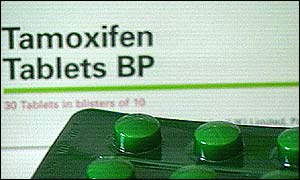 Tamoxifen is an effective treatment for breast cancer Scientists have discovered a key chemical switch that may allow some breast tumours to become resistant to the drug tamoxifen. Identifying the switch is an important step towards finding reliable ways of predicting whether the drug will be effective. Tamoxifen has been enormously successful at treating breast cancer.
Scientists are now using their research to develop a new testing procedure to pick out cancers in which the switch has been activated. Tamoxifen works by blocking the function of a molecule called the oestrogen receptor (ER), which around half of breast tumours rely on for their growth. Of these tumours, around 70% respond to tamoxifen treatment, but some develop resistance and others never respond. Different forms Scientists looked at ER in breast tumours, to find out whether it differed from the normal form of the molecule. They found that part of the molecule becomes chemically altered through a process called phosphorylation. Far from being inactivated by tamoxifen, the altered form seems to become more active in response to the drug. Lead researcher Dr Simak Ali, of Imperial College, London, said: "Chemical alteration seems to switch the ER molecule into a completely different state, in which it becomes immune to the inhibitory effects of tamoxifen. "It's important that we learn to identify women who are not going to respond to the drug, so we can spare them from unsuccessful treatment and explore other ways of looking after them." Dr Ali and his colleagues have developed antibodies that can home in on the altered form of the ER molecule, allowing scientists to detect its presence. New test They are in the process of developing a way of testing for the altered molecule in tumour biopsy samples, so that doctors can more accurately judge which treatment each patient should receive. Dr Ali said: "At the moment, we have only a relatively primitive system for monitoring tamoxifen treatment. "We're aiming to develop a much more sophisticated testing procedure, potentially saving valuable time that might otherwise be wasted on unsuitable treatments." Sir Paul Nurse, Interim Chief Executive of Cancer Research UK, says: "The development of tamoxifen was a crucial step forward for breast cancer treatment, but while it is effective for many women it does not work for everyone. "By identifying those women who won't respond to the drug, doctors can explore other avenues of treatment more rapidly." | | See also:  01 Jul 02 | Health 20 Mar 02 | Health 30 Mar 01 | Health 19 May 00 | Medical notes Internet links: The BBC is not responsible for the content of external internet sites Top Health stories now: Links to more Health stories are at the foot of the page. | ||||||||||||||||||||||||||||||||||||||||||||||||||||||||||||||||||||||||||||||||||||||||||||||||||||||||||||||||||||||||||||||||||||||||
| |
|  E-mail this story to a friend E-mail this story to a friend |
| |
| Links to more Health stories |
| | | ||
 | ||||
 | | Back to top
| ||
| ---------------------------------------------------------------------------------- To BBC Sport>> | To BBC Weather>> | To BBC World Service>> ---------------------------------------------------------------------------------- © MMIII | News Sources | Privacy |





