
|
 |
 | | | | | | ||||||||||||||||||||||||||||||||||||||||||||||||||||||||||||||||||||||||||||||||||||||||||||||||||||||||||||||||||||||||||||||||||||||||
| | | You are in: Health | ||||||||||||||||||||||||||||||||||||||||||||||||||||||||||||||||||||||||||||||||||||||||||||||||||||||||||||||||||||||||||||||||||||||||||
|
| | Wednesday, 17 July, 2002, 16:50 GMT 17:50 UK Life's first moments unravelled 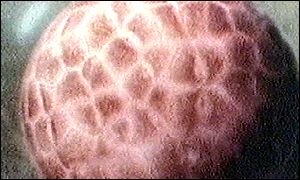 A developing embryo - but what sparks its growth A gene that plays a key role in the first stage of embryonic life has been discovered by UK researchers. It could hold the key to new male contraceptives - and help some couples who have been unable to have children. The finding could also produce new, more efficient ways of cloning.
They know that cell division is triggered by a mysterious "wave" of calcium which surges through the egg, but until now, they did not know how this happened. Professor Tony Lai and a team of researchers at the University of Wales College of Medicine have identified a "sperm factor" gene. 'Significant implications' This produces a protein called PLC-zeta which appears to be key to producing the calcium reaction in the egg. Professor Lai said: "For the last 10 or 12 years we have been focusing specifically on identifying a molecule such as this. "Now we've found that this single molecule kicks the whole process off. It has very significant implications." Those may include effective contraceptives for men which work by blocking the gene. The team believes that if the PLC-zeta was absent, fertilisation could not take place. To test the theory, it introduced the protein into single eggs - and watched as they started to divide and carry on developing right up to the "blastocyst" stage - small clusters of dozens of cells. The technique has real potential to help scientists involved in cloning. At the moment, to start cell division, the egg is given an electric shock. This makes holes in the cell membrane through which calcium enters and simulates the surge, starting division. But it is a crude technique that often fails. Professor Lai said: "That's like banging it with a hammer and hoping it works. We hope that our molecule will make the process far more efficient and reliable." Experts impressed Professor Ian Wilmut, who led the team that created Dolly the sheep, agreed, saying he would certainly like to try the new protein. "People have been looking for this for a long time, and they seem definitely to have found it." The discovery could also help those who want to use embryonic stem cells as potential therapies for disease. | | See also:  10 Aug 98 | Health 01 Jul 02 | Health 20 Jun 02 | Health Internet links: The BBC is not responsible for the content of external internet sites Top Health stories now: Links to more Health stories are at the foot of the page. | ||||||||||||||||||||||||||||||||||||||||||||||||||||||||||||||||||||||||||||||||||||||||||||||||||||||||||||||||||||||||||||||||||||||||
| |
|  E-mail this story to a friend E-mail this story to a friend |
| |
| Links to more Health stories |
| | | ||
 | ||||
 | | Back to top
| ||
| ---------------------------------------------------------------------------------- To BBC Sport>> | To BBC Weather>> | To BBC World Service>> ---------------------------------------------------------------------------------- © MMIII | News Sources | Privacy |





