
|
 |
 | | | | | | ||||||||||||||||||||||||||||||||||||||||||||||||||||||||||||||||||||||||||||||||||||||||||||||||||||||||||||||||||||||||||||||||||||||||||
| | | You are in: Health | ||||||||||||||||||||||||||||||||||||||||||||||||||||||||||||||||||||||||||||||||||||||||||||||||||||||||||||||||||||||||||||||||||||||||||||
|
| | Tuesday, 16 July, 2002, 10:46 GMT 11:46 UK Bowel cancer risk pinpointed 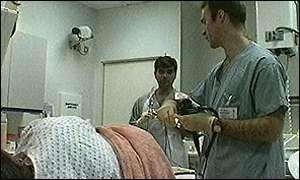 Assessing risk is not always accurate Doctors have developed a simple way to improve identification of people at high risk of bowel and colon cancer. It is based on the principle that patients know best what symptoms they have, but may be too embarrassed to talk openly about them to doctors. Colorectal cancer is the second most common cause of death from cancer in the UK, with 30,000 new cases and 19,000 deaths every year.
The new assessment system, details of which are published on The Lancet online, has been developed by a team of UK researchers from Leighton Hospital, Crewe. They believe it could help to predict colorectal cancers more reliably than current NHS guidelines which can often over or under-estimate the real risk to patients. Questionnaire First, patients complete a questionnaire giving details of their symptoms and how long they have had them.
Those with the highest level of risk can be prioritised for further tests and treatments. In total, 2,268 patients who had been referred by their GP to a specialist with symptoms such as rectal bleeding, and increased bowel movements were studied. Ninety-five were subsequently diagnosed with cancer. The system accurately detected 99% of cancers, including 13% of cancer patients who would have been categorised as low risk under the current guidelines. However, overall 10% fewer patients were rated as being at high risk. Researcher Dr David Cade said: "It has the potential to detect more cancers. "We put the emphasis back on the patients so they share responsibility for their health care." Professor Robert Steele, an advisor to the charity Colon Cancer Concern, told BBC News Online any measure which would improve the predicted value of symptoms is to be welcomed. However, he said: "It must be stressed that early cancers are asymptomatic and often by the time colorectal cancer produces symptoms the disease is advanced locally." Screening study In a separate study, the US Preventive Services Task Force has recommended widespread screening for adults aged over 50. The researchers recommended two screening methods:
The UK currently has no national approach to colon cancer screening. Research published earlier this year suggested a single bowel examination at around the age of 60 could potentially cut deaths from the disease by 40%. Faecal Occult Blood pilots are running in Coventry and Warwickshire and in Grampian, Tayside and Fife. According to the National Cancer Plan, the pilots will be complete in 2002. The US research appears in the journal Annals of Internal Medicine. | | See also:  06 Jun 02 | Health 23 Feb 02 | Health 25 Oct 01 | Health Internet links: The BBC is not responsible for the content of external internet sites Top Health stories now: Links to more Health stories are at the foot of the page. | ||||||||||||||||||||||||||||||||||||||||||||||||||||||||||||||||||||||||||||||||||||||||||||||||||||||||||||||||||||||||||||||||||||||||||
| |
|  E-mail this story to a friend E-mail this story to a friend |
| |
| Links to more Health stories |
| | | ||
 | ||||
 | | Back to top
| ||
| ---------------------------------------------------------------------------------- To BBC Sport>> | To BBC Weather>> | To BBC World Service>> ---------------------------------------------------------------------------------- © MMIII | News Sources | Privacy |





