
|
 |
 | | | | | | ||||||||||||||||||||||||||||||||||||||||||||||||||||||||||||||||||||||||||||||||||||||||||||||||||||||||||||||||||||||||||||||||||||||||
| | | You are in: Health | ||||||||||||||||||||||||||||||||||||||||||||||||||||||||||||||||||||||||||||||||||||||||||||||||||||||||||||||||||||||||||||||||||||||||||
|
| | Friday, 5 April, 2002, 00:48 GMT 01:48 UK Lung cancer block hope 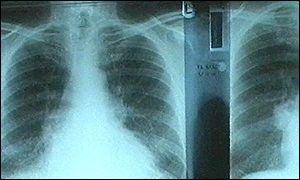 40,000 people are diagnosed with lung cancer each year The key to halting the rapid spread of lung cancer may be contained in four molecules that have been uncovered by scientists.
It affects around 10,000 people each year in the UK, and is notoriously difficult to treat and often becomes resistant to chemotherapy. The team have identified vital molecules that help the disease grow and resist treatment. They hope that their findings will open the way to designing more effective drugs, which are urgently needed. Comes back Dr Seckl said: "There's a desperate need for new treatments for lung cancers. "This type of tumour grows incredibly fast and many patients are diagnosed when the disease is already widespread. "Surgery is rarely an option, so we usually treat lung cancer patients using combinations of chemotherapy and radiotherapy." Dr Seckl said that often the disease seems to disappear, and scans look clear. However, the cancer is still there - it just too small to detect. Within months it rears its ugly head again, and this time it is resistant to further treatment. Key chemical Dr Seckl's team concentrated their efforts on a growth factor known as FGF-2. Growth factors work by latching on to tiny receptors on the outside of the cell and setting off a chain of signals that make the cell grow and divide. Cancer patients have up to 20 times the normal level of FGF-2 in their blood. The researchers found that FGF-2 combines with two other molecules to stimulate cell division, and with a third to counter the effect of anticancer drugs. Dr Seckl said: "All four molecules are targets for new drugs that will block cancer growth and restore its sensitivity to existing treatments. "Our aim now is to design and develop these new drugs." Major problem Professor Gordon McVie, Joint Director General of Cancer Research UK, said: "Resistance to treatment is a major problem we are yet to overcome. "Dr Seckl's discoveries add vital pieces to the jigsaw of our understanding of this particularly nasty form of the disease. "We now need to push on to find new drugs that will target these key molecules, stopping the cancer dead in its tracks." Lung cancer, dubbed the 'invisible cancer' is the single biggest killer cancer in the UK. Only 5% of the 40,000 people diagnosed in the UK each year survive the disease beyond five years. Small cell lung cancers account for around a quarter of cases diagnosed. The research is published in the Journal of Biological Chemistry. | | See also:  07 Oct 02 | Health 15 Feb 02 | Health 03 Dec 01 | Health 06 Dec 01 | Health 01 Aug 01 | Health 12 Jun 01 | Health 21 Nov 01 | Health Internet links: The BBC is not responsible for the content of external internet sites Top Health stories now: Links to more Health stories are at the foot of the page. | ||||||||||||||||||||||||||||||||||||||||||||||||||||||||||||||||||||||||||||||||||||||||||||||||||||||||||||||||||||||||||||||||||||||||
| |
|  E-mail this story to a friend E-mail this story to a friend |
| |
| Links to more Health stories |
| | | ||
 | ||||
 | | Back to top
| ||
| ---------------------------------------------------------------------------------- To BBC Sport>> | To BBC Weather>> | To BBC World Service>> ---------------------------------------------------------------------------------- © MMIII | News Sources | Privacy |





