|
 |
 | | | | | | ||||||||||||||||||||||||||||||||||||||||||||||||||||||||||||||||||||||||||||||||||||||||||||||||||||||||||||||||||||||||||||||||||||||||||||||||||||||||||||||||||||||||||||||||||||||||||||||||
| | | You are in: Europe | ||||||||||||||||||||||||||||||||||||||||||||||||||||||||||||||||||||||||||||||||||||||||||||||||||||||||||||||||||||||||||||||||||||||||||||||||||||||||||||||||||||||||||||||||||||||||||||||||||
|
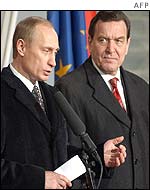
| | Wednesday, 12 February, 2003, 10:52 GMT Europe's new gang resists US 'bullying'  Plotters: Russia, France and Germany have joined forces
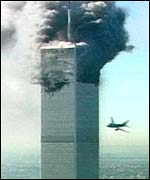
Russia, under President Putin, has been currying favour with Washington, especially since the terrorist attacks of 11 September, 2001.
And France... Well, France has always been something of a wandering star in the Allied constellation. But it too, in recent years, has played its role in American-led wars in Kosovo and Afghanistan. So what's changed? One thing unites Moscow, Berlin and Paris - their abhorrence of what they regard as American bullying, a feeling that has grown in the past week or so as the insults about them piled up.
The more criticisms are levelled against them - for causing a "crisis of credibility" within Nato, and for their "shameful" refusal to help Turkey - the more this new triangular relationship will be cemented. Germany, currently in the chair of the UN Security Council, has been canvassing opinion, and says only four of its members - the US, UK, Spain and Bulgaria - oppose the line being taken by the anti-war troika. The consequences could be very interesting. Security Council tactics Unless the UN's chief weapons inspector Hans Blix delivers a damning report on Iraq next Friday, then the three will at the very least stand a good chance of preventing the US and UK from getting a second resolution adopted which would authorise the use of force against Iraq. They may go even further and propose a "counter-resolution" calling for prolonged, intensified arms inspections, backed up by increased surveillance.
Russia may have been sucking up to America of late, but as a nation it has been smarting ever since the Soviet Union collapsed and it lost its status as a superpower, and with it the "right" to divide the world into spheres of influence with the USA. Under President Yeltsin, the Kremlin resisted every American move towards hegemony, including the gradual extension of Nato into eastern Europe. Vladimir Putin was more pragmatic. He acquiesced in the expansion of Nato, even to include the three Baltic states territories which were once part of the USSR.
After 11 September Putin quickly signed up to the "war on terror", partly to gain sympathy and help in his own war on terrorism in Chechnya. A Nato-Russia council was set up last May, crowning the new relationship. But Iraq is another matter. For one thing, like France, Russia has economic interests there. But more important, President Bush's attitude has reminded Russians of the bad old days when American presidents branded Russia the "axis of evil" and went around toppling or undermining pro-Soviet regimes around the world. It has reawakened Russia's acute sense of hurt and inferiority. German pacifism Germany's position is the most extreme - ruling out participation in a war on Iraq even if there is a UN resolution in favour of it. That stance was adopted before last September's elections and probably helped Gerhard Schroeder scrape back into office. It was a popular policy in a country which since World War II has developed strong pacifist traditions. Nonetheless, it might have been modified had it not been for America's strong-arm tactics, which have united Germans in their opposition to war. All three countries suspect the US is using Nato as its personal weapon, circumventing the United Nations, where international action should really be decided.
Officials in Paris and Berlin point out that Turkey would not be under a particular threat from Iraq in the first place, were it not for America's plans for war. The divide is deep. The new troika believes there is no reason to plunge the region into war at this stage, for three reasons: it would lead to massive civilian bloodshed, it would destabilise the region, and it might still be possible to disarm Iraq by peaceful means. And if there is to be action, they argue, it should not be carried out by a self-appointed "world policeman" (a phrase coined by the Soviet Union to decry American foreign adventures) but collectively, by the United Nations. | |
See also:  12 Feb 03 | Middle East 11 Feb 03 | Middle East 11 Feb 03 | Americas 11 Feb 03 | Europe 10 Feb 03 | Europe 11 Feb 03 | Americas Internet links: The BBC is not responsible for the content of external internet sites Top Europe stories now: Links to more Europe stories are at the foot of the page. | ||||||||||||||||||||||||||||||||||||||||||||||||||||||||||||||||||||||||||||||||||||||||||||||||||||||||||||||||||||||||||||||||||||||||||||||||||||||||||||||||||||||||||||||||||||||||||||||||
 | |
|  E-mail this story to a friend E-mail this story to a friend |
| |
| Links to more Europe stories |
| | | ||
 | ||||
 | | Back to top
| ||
| ---------------------------------------------------------------------------------- To BBC Sport>> | To BBC Weather>> | To BBC World Service>> ---------------------------------------------------------------------------------- © MMIII | News Sources | Privacy |






 Russia may have been sucking up to America of late, but as a nation it has been smarting ever since the Soviet Union collapsed and it lost its status as a superpower