|
 |
 | | | | | | ||||||||||||||||||||||||||||||||||||||||||||||||||||||||||||||||||||||||||||||||||||||||||||||||||||||||||||||||||||||||||||||||||||||||||||||||||||||||||||||||||||||||||||||||||||||||||||
| | | You are in: Europe | ||||||||||||||||||||||||||||||||||||||||||||||||||||||||||||||||||||||||||||||||||||||||||||||||||||||||||||||||||||||||||||||||||||||||||||||||||||||||||||||||||||||||||||||||||||||||||||||
|
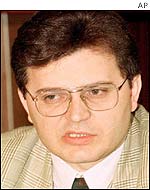
| | Wednesday, 12 February, 2003, 07:17 GMT Milosevic trial a legal marathon  Milosevic: accused of "systematic campaign of terror"
He is the first former head of state to go on trial before an international court, and there has been widespread interest in his case.
In the case of Bosnia, the charges also include genocide. The indictment alleges that Mr Milosevic participated in a "joint criminal enterprise", involving "a systematic campaign of terror and violence".
So far it has been the turn of the prosecution to present its case. In the first year it produced 148 witnesses, most of them testifying about the Kosovo part of the indictment on which the prosecution concluded its case in September. On the basis of the current timetable, the deadline for presenting evidence about the Bosnia and Croatia parts of the indictment runs out in mid-May. Ill-health However, that deadline may be extended. The trial has already been interrupted half a dozen times because of Mr Milosevic's ill health; the ex-president suffers from high blood pressure and potential heart trouble. Besides, Mr Milosevic has used up much time to make political statements or to cross-examine the witnesses. On a number of occasions Mr Milosevic spent far more time on subjecting witnesses to questioning than the prosecution did in presenting the evidence against him. Mr Milosevic has given every appearance of relishing the chance to cross-examine witnesses. On more than just a few occasions he scored valuable points by undermining the reliability of some of those testifying against him. Ensuring Milosevic's rights But he has also demolished his own argument that The Hague tribunal is unlawful - after all he has been co-operating with it day after day.
For its part, the tribunal has been doing its best to be fair to the defendant and accommodate his needs. It has appointed three "amici curiae" - friends of the court - who have been overseeing the legal process and taking action to ensure that Mr Milosevic's rights are not infringed. It has allowed him to receive a mass of documentation from a large team of helpers in Belgrade whose sources of information reportedly include intelligence officers. And it has repeatedly given Mr Milosevic time to recuperate from his bouts of illness while reducing the number of trial sessions held each week. War crimes evidence Two of the key points the prosecution has been trying to prove have taken up a considerable part of the proceedings.
One of these, which featured prominently in the first six months, involved presenting evidence that war crimes had, indeed, taken place in Kosovo in 1998-99. This is because Mr Milosevic is the first accused to go on trial over Kosovo, and the general legal facts need to be established. In relation to Bosnia, a number of earlier trials at the tribunal had already concluded that war crimes had actually been committed. So there has been no need to labour the point at the Milosevic trial. But what the prosecution has tried to prove over the past six months is that Mr Milosevic - nominally just the Serbian president at the time - also had influence and power over the direction of affairs in Bosnia and Croatia during the first half of the 1990s. Establishing responsibility In recent weeks a number of senior officials, including the one-time leader of Croatia's Serb separatists, Milan Babic, and the ex-head of the Yugoslav military's counter-intelligence service, General Aleksander Vasiljevic, have been seeking to prove Mr Milosevic's dominant role in Serb affairs in Bosnia and Croatia.
In other words, he would be found guilty - even if he did not personally order any crimes to be committed - simply for failing to use his authority to prevent atrocities or to punish those responsible once atrocities had been committed. What the prosecution will find more difficult to establish, in the absence of written orders, is Mr Milosevic's own personal responsibility for any of the crimes. Evidence mounting All the same, the weight of evidence is mounting against Mr Milosevic, and some key witnesses are still to come. That evidence is having some effect even in Serbia, where public perceptions were initially extremely hostile towards the tribunal which was seen as one-sided and anti-Serb. How Mr Milosevic copes with the pressures of the trial will have an important bearing on the proceedings in the coming months. He will have the right to the same amount of time to present his defence as the prosecution has been allocated. In other words, if Mr Milosevic takes full advantage of his right, the trial would drag on for at least another 18 months. But his ill health may interfere with the proceedings. And victims of the recent conflicts in the Balkans fear that this may deprive them of justice in the case of the man who is blamed by many for being the chief instigator behind the war crimes of the 1990s. | |
See also:  06 Feb 03 | Europe 09 Jan 03 | Europe 30 Jan 03 | Europe 13 Nov 02 | Europe 12 Nov 02 | Europe 04 Nov 02 | Europe Internet links: The BBC is not responsible for the content of external internet sites Top Europe stories now: Links to more Europe stories are at the foot of the page. | ||||||||||||||||||||||||||||||||||||||||||||||||||||||||||||||||||||||||||||||||||||||||||||||||||||||||||||||||||||||||||||||||||||||||||||||||||||||||||||||||||||||||||||||||||||||||||||
 | |
|  E-mail this story to a friend E-mail this story to a friend |
| |
| Links to more Europe stories |
| | | ||
 | ||||
 | | Back to top
| ||
| ---------------------------------------------------------------------------------- To BBC Sport>> | To BBC Weather>> | To BBC World Service>> ---------------------------------------------------------------------------------- © MMIII | News Sources | Privacy |






 On a number of occasions Mr Milosevic spent far more time on subjecting witnesses to questioning than the prosecution did in presenting the evidence against him