
|
 |
 | | | | | | |||||||||||||||||||||||||||||||||||||||||||||||||||||||||||||||||||||||||||||||||||||||||||||||||||||||||||||||||||||||||||||||||||||||||||||||||||||||||||||||||||||||||||||||||||||||||||||||||||||||||||||||||||||
| | | You are in: Europe | |||||||||||||||||||||||||||||||||||||||||||||||||||||||||||||||||||||||||||||||||||||||||||||||||||||||||||||||||||||||||||||||||||||||||||||||||||||||||||||||||||||||||||||||||||||||||||||||||||||||||||||||||||||||
|
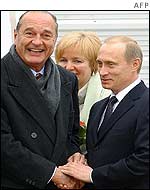
| | Monday, 10 February, 2003, 17:50 GMT Putin in Paris to forge Iraq strategy  War sceptics believe public opinion is on their side Russia and France - two of the most powerful players in the Iraq crisis - are holding key talks on the way forward. Russian President Vladimir Putin arrived in Paris on Monday, where he was met by French President Jacques Chirac at the start of three days of talks which will be dominated by the crisis. Mr Putin's visit began as Europe's divisions on Iraq also surfaced dramatically in a heated Nato meeting in Brussels. France and Belgium blocked plans to boost Turkish defences ahead of any war with Iraq.
Both nations have the power of veto on the UN Security Council, and are trying to steer the crisis away from war. Central to the Paris talks will be French proposals to boost the number of inspectors - possibly to 300. BBC Paris correspondent James Coomarasamy says Mr Putin arrives in Paris at a time when France and Russia appear to be on the same diplomatic wavelength. Mr Chirac broke with protocol and went to Charles de Gaulle airport in person to welcome his Russian visitor. The two leaders then boarded a helicopter for central Paris to begin their talks.
Forming a strong three-way alliance between Russia, France and Germany would be seen as a diplomatic coup for Paris and Berlin, previously dismissed by US Defence Secretary Donald Rumsfeld as "old Europe". Germany has said fresh proposals on boosting weapons inspectors, based on the French plan, will be presented to the Security Council on Friday. That would set up a direct confrontation with the US, which has dismissed it as a diversion. 'Peacekeepers' One reported German proposal, to send thousands of UN troops to back up the weapons inspectors, was being played down in Paris and Berlin on Monday. Europe remains deeply split over the way forward on Iraq. The UK is leading a bloc of countries, including Spain and Italy, supportive of the US position, while France, Germany and Russia remain powerful "war sceptics". Mr Putin has already pledged to work closely with France and Germany with the aim of achieving a peaceful resolution to the crisis in Iraq. "We are convinced that a one-sided use of force would lead to great suffering for the Iraqi population and increase tension in the whole region," Mr Putin said after talks with Mr Schroeder on Sunday. Veto fears And Chancellor Schroeder told a joint news conference in Berlin: "We want to jointly make sure that there is a peaceful disarmament." Mr Putin says China, Russia, France and Germany - all Security Council members - share similar views on the crisis. But BBC Moscow correspondent Nikolai Gorshkov says Russia does not want to use its veto at the UN because it would ruin the new-found strategic partnership between Moscow and Washington. UN weapons inspectors deliver a key report to the Security Council on Friday, when they will reveal whether the Iraqis are complying with UN disarmament obligations. US Secretary of State Colin Powell said on Sunday that if the weapons inspectors told the Security Council that Iraq was not co-operating, the US would immediately press for a resolution authorising possible military action. Fresh row Details of a broad Franco-German plan, including more inspectors and UN troop deployment, appeared in the media in Germany, but on Monday both French and German officials distanced themselves from the idea. But it was not in time to stop a diplomatic backlash from other European countries.
And the Dutch Government reacted with even greater anger. "It is foolish to launch this scheme through the media and the timing is unfortunate because... the pressure on Saddam Hussein should not let up," said a Foreign Ministry spokesman. "If you start waving peace plans now, Hussein will think 'Great, I will fool them again'." The UK said that neither France nor Germany were saying there was a "secret plan". | |
See also:  05 Feb 03 | Europe 14 Sep 02 | Europe 06 Feb 03 | Middle East Internet links: The BBC is not responsible for the content of external internet sites Top Europe stories now: Links to more Europe stories are at the foot of the page. | |||||||||||||||||||||||||||||||||||||||||||||||||||||||||||||||||||||||||||||||||||||||||||||||||||||||||||||||||||||||||||||||||||||||||||||||||||||||||||||||||||||||||||||||||||||||||||||||||||||||||||||||||||||
 | |
|  E-mail this story to a friend E-mail this story to a friend |
| |
| Links to more Europe stories |
| | | ||
 | ||||
 | | Back to top
| ||
| ---------------------------------------------------------------------------------- To BBC Sport>> | To BBC Weather>> | To BBC World Service>> ---------------------------------------------------------------------------------- © MMIII | News Sources | Privacy |




 We are convinced that efforts for a peaceful resolution of the situation should be persistently continued


