|
 |
 | | | | | | ||||||||||||||||||||||||||||||||||||||||||||||||||||||||||||||||||||||||||||||||||||||||||||||||||||||||||||||||||||||||||||||||||||||||||||||||||||||||||||||||||||||||||||
| | | You are in: Europe | ||||||||||||||||||||||||||||||||||||||||||||||||||||||||||||||||||||||||||||||||||||||||||||||||||||||||||||||||||||||||||||||||||||||||||||||||||||||||||||||||||||||||||||||
|
| | Tuesday, 4 February, 2003, 19:28 GMT Siberian drillers set sights on Iraq  Russians say they have the expertise needed for Iraq
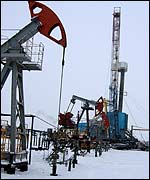
They've got 3,000 metres to go before they hit the oil, but they're making steady progress.
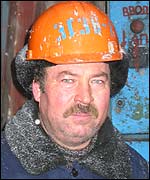
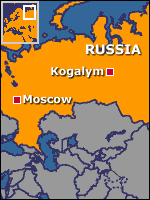
With high oil prices being the saviour of the Russian economy, Moscow put enormous effort into expanding oil production in western Siberia in the mid-1980s. The town of Kogalym, three hours' flying time east of Moscow, was built as a symbol of hoped-for oil wealth. Sergei, a Siberian oilfields' veteran with more than 20 years' service, knows how vital the black stuff is for prosperity. And he knows the company he works for, Lukoil, has plans to expand beyond its home reserves.
Thousands of men like Sergei worked in Iraq in Soviet times, exploring the country's untapped oil reserves and building the infrastructure and equipment necessary to get Baghdad's oil industry off the ground. But first the Iran-Iraq war, then the Gulf war, interrupted Russia's adventure in the Iraqi oilfields. Contracts Lukoil has tried to boost Moscow's hand there in recent years. In 1997 it signed a 23-year agreement with Baghdad to develop the Western al-Qurna oilfield.
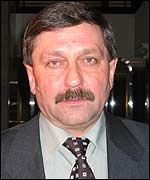
Russian oil specialists in Siberia, the region producing around 65% of Lukoil's output, are convinced it's Moscow's men who are best suited to operate in Iraq. "The equipment in Iraq and the conditions of the fields there are very similar to what was in Russia in the early 1990s,"' says Vladimir Semyonov, a technical manager in Lukoil's Western Siberia branch. "Knowing all the problems we can bump into there, it will be very easy to adjust the equipment in the Iraqi fields today to world standards." But it's not just a desire to demonstrate expertise which is driving Russian oil concerns in Iraq.
Things were going well in the late 1990s with Russian oil companies lifting $4 billion worth of Iraqi oil under the UN "oil for food" programme. But with a new conflict looming in the Gulf, Russia is fighting a rearguard action to defend its oil interests. "It's a big risk to put funds into developing oil production in Iraq. But if it happens and oil production gets under way there, then the risk will be justified," says Nikolai Inyushin, one of Lukoil's top managers in Siberia. Respect for Iraq Against the background of a huge Anglo-American build-up in the Gulf, Russian executives have realised they could be about to see years of carefully cultivated plans slip through their fingers.
In mid-January, business leaders were signing deals with Iraqi oil officials in Baghdad. Lukoil, which had its Western Qurna agreement apparently cancelled by Saddam Hussein's government in December after allegations from Baghdad that it was trying to close deals with opposition figures, has claimed it is now back in favour. An oil insider in Russia, Yury Shafranik, heads the Russia-Iraq co-operation committee - widely seen as the Russian Government's main conduit for relations with Baghdad. Even with pressure mounting to oust Saddam, Russian business - with billions of dollars to play for - is still loyal. "I don't think the regime there is extremely harsh. The Russian government and the Russian business look with respect on the leadership and the system of government. So why try and push us into a corner to say if we are for or against Saddam," says Mr Shafranik. Some contact is better than no contact at all. That's the way Russian business is thinking at the moment, according to oil analyst Stephen O'Sullivan. Back in Kogalym, Russia's future oil specialists are relaxing in the town's glistening, super-modern pool and bowling hall - a gift of a magnanimous oil company and proof, if it was needed, of where Russia's real wealth could come from. "The oil price is very good for Russia! People live here to work and earn money," giggles Oleg, a student from the local Oil and Gas University. Russia's oil bosses will be watching with trepidation in the coming weeks to see if things continue quite so well for them. | | See also:  23 Jan 03 | Middle East 17 Jan 03 | Business 24 Jun 02 | Business 03 Nov 00 | Business 12 Mar 00 | From Our Own Correspondent Top Europe stories now: Links to more Europe stories are at the foot of the page. | ||||||||||||||||||||||||||||||||||||||||||||||||||||||||||||||||||||||||||||||||||||||||||||||||||||||||||||||||||||||||||||||||||||||||||||||||||||||||||||||||||||||||||||
 | |
|  E-mail this story to a friend E-mail this story to a friend |
| |
| Links to more Europe stories |
| | | ||
 | ||||
 | | Back to top
| ||
| ---------------------------------------------------------------------------------- To BBC Sport>> | To BBC Weather>> | To BBC World Service>> ---------------------------------------------------------------------------------- © MMIII | News Sources | Privacy |






 The equipment in Iraq and the conditions of the fields there are very similar to what was in Russia in the early 1990s