|
 |
 | | | | | | |||||||||||||||||||||||||||||||||||||||||||||||||||||||||||||||||||||||||||||||||||||||||||||||||||||||||||||||||||||||||||||||||||||||||||||||||||||||||||||||
| | | You are in: Europe | |||||||||||||||||||||||||||||||||||||||||||||||||||||||||||||||||||||||||||||||||||||||||||||||||||||||||||||||||||||||||||||||||||||||||||||||||||||||||||||||||
|
| | Wednesday, 29 January, 2003, 18:47 GMT Symbolic last trip for Czech president  Vaclav Havel laid flowers at Alexander Dubcek's grave Czech President Vaclav Havel has made his final foreign trip - visiting Slovakia to honour the countries' shared history. Mr Havel was president of Czechoslovakia for nearly three years after the communist authorities were swept from power in the 1989 Velvet Revolution. But he stayed on as Czech president after the two halves of the republic split apart at the start of 1993.
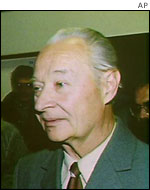
The Slovak visit "closes a circle", Mr Havel said. He steps down on Sunday after 13 years in office. During his visit to Bratislava, the former dissident playwright laid flowers at the grave of Slovak Alexander Dubcek, whose introduction of "communism with a human face" in 1968 led to the Soviet invasion. Mr Dubcek supported Mr Havel in the 1989 revolution and returned to politics, but died three years later following a car crash.
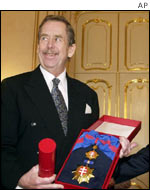
Slovakia's President Rudolf Schuster honoured his Czech counterpart with the country's highest honour - the White Double Cross of First Order. "He is an example because he always remained faithful to what he declared during the (anti-communist) revolution, and has never changed his opinions," said Mr Schuster. Mr Havel said since the country's split "both nations gained more confidence". 'Torture suspect dead' Another chapter of Czechoslovak history was closed on Wednesday, with Czech newspapers reporting the death of former Czechoslovak Interior Minister Jaromir Obzina, who is accused of organising the torture of dissidents. He allegedly ran the Asanace or "cleaning" operation in the late 1970s which forced dissidents to leave the country by torturing them. Mr Obzina was charged with his role in the operation, but never appeared in court as the supreme court failed to establish whether or not he was covered by parliamentary immunity at the time of the crimes. Around 20 dissidents were forced into exile in the 1970s and 1980s. | | See also:  15 Jan 03 | Europe 15 Jan 03 | Media reports 04 Jun 02 | Europe 12 Feb 01 | Europe 20 Oct 02 | Country profiles 20 Oct 02 | Country profiles Internet links: The BBC is not responsible for the content of external internet sites Top Europe stories now: Links to more Europe stories are at the foot of the page. | |||||||||||||||||||||||||||||||||||||||||||||||||||||||||||||||||||||||||||||||||||||||||||||||||||||||||||||||||||||||||||||||||||||||||||||||||||||||||||||||
 | |
|  E-mail this story to a friend E-mail this story to a friend |
| |
| Links to more Europe stories |
| | | ||
 | ||||
 | | Back to top
| ||
| ---------------------------------------------------------------------------------- To BBC Sport>> | To BBC Weather>> | To BBC World Service>> ---------------------------------------------------------------------------------- © MMIII | News Sources | Privacy |