|
 |
 | | | | | | |||||||||||||||||||||||||||||||||||||||||||||||||||||||||||||||||||||||||||||||||||||||||||||||||||||||||||||||||||||||||||||||||||||||||||||||||||||||||||||||||||||||
| | | You are in: Europe | |||||||||||||||||||||||||||||||||||||||||||||||||||||||||||||||||||||||||||||||||||||||||||||||||||||||||||||||||||||||||||||||||||||||||||||||||||||||||||||||||||||||||
|
| | Tuesday, 17 December, 2002, 10:47 GMT Turks see silver lining in EU date 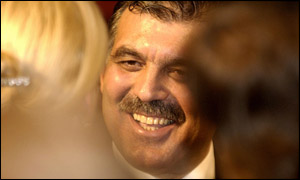 Turkish Prime Minister Abdullah Gul: Quietly confident
Through the clouds of depression over the date given to Turkey for talks on European Union membership - later than the government wanted and with substantial strings attached - a silver lining may be becoming apparent. The Turkish Government was hoping for a date for membership negotiations in 2003. Early 2004 had been mentioned as a 'worst-case' possibility by Foreign Minister Yasar Yakis. So when EU leaders came up with the end of 2004 for possible beginning of negotiations, so long as human rights reforms are kept on track, there was much wailing and gnashing of teeth amongst politicians, the media and the general public. Many are well aware that with new entrants joining in May 2004 negotiations will be that bit more complex - and old enemies will have a chance to settle old scores. But with some time to reflect, a couple of days after the decision became official, some seem to be seeing things in a different way. There is recognition in some newspapers that for the first time in 40 years of EU aspirations, Turkey now has a date, even if it is conditional, on the table. That is more than it has had before. 'Good result' In amongst the office workers of Esentepe, a commercial district in Istanbul, the mood is a good deal more positive than amongst the disappointed politicians in Ankara.
In Esen Kosk, a restaurant in one of the backstreets of Esentepe, dark-suited patrons fill the tables swiftly, wolf down their food and then go back to their banks, their import-export businesses and their service companies. The windows are steamy from the hotplates keeping food warm. Waiters in red waistcoats weave between tables balancing plates of meatballs, spinach and yoghurt, lamb stew and the seasonal speciality, fried anchovies. Pausing over his soup Kenan Ergun, a 31-year-old bank worker, calls the Copenhagen summit a "good result". It would have been better to have got a clear date, he says "even if it was 2010 or 2015. But the earliest date that Turkey could realistically enter is 2010." So does he think that the EU is serious about having Turkey as member? There is a long pause whilst Kenan examines his soup pensively. "I don't think so," comes the eventual reply, "although we've done everything they've asked us to." Legal reforms The reforms which have been driven through the Turkish parliament this year are on many people's minds. Just five years ago the abolition of the death penalty and loosening of the restrictions on the use of Kurdish would have been unthinkable. Now those changes are just the first steps of what looks like an ongoing reform process. Sardar Ediz, a 44-year-old director in a distribution company echoes exactly the words and concerns of EU leaders. "Implementation must be looked at," he says. "Changing laws and rules is easy, especially with the one-party government that we've got at the moment. So implementation is the most important criterion." Political anger So what of the angry words of Prime Minister Abdullah Gul? When he talked to British Prime Minister Tony Blair after the decision on a date had been announced he denounced it as "impossible to accept". It was, he said, "making a great discrimination". "That's the normal kind of statement from a politician" says Kursat Kocdag, Sardar's lunch companion, a 45-year-old managing director. "They'd worked very hard, so must have been very frustrated." Both men seem quietly confident that Turkey's time has really come, that so long as the government keeps things on track and that the rest of the state moves along with the reforms, that Turkey will make it into the EU. "If it is objectively evaluated, says Kursat, "then Turkey will be fine." That may be true; but a good number of people in Turkey do not think that Europe is objective when it comes to thinking about their country. Up at the cash register, restaurant manager Mehmet Dilber is jovial as customers queue up to pay their bills. Surrounded by a bewildering array of credit card processing machines - for some reason each bank issues a different machine - he grins, teeth showing under a fine Turkish moustache. "2004, 2014, who cares?" he chuckles. "Just so long as they let us in!" | | See also:  14 Dec 02 | Media reports 11 Dec 02 | Country profiles Top Europe stories now: Links to more Europe stories are at the foot of the page. | |||||||||||||||||||||||||||||||||||||||||||||||||||||||||||||||||||||||||||||||||||||||||||||||||||||||||||||||||||||||||||||||||||||||||||||||||||||||||||||||||||||||
| |
|  E-mail this story to a friend E-mail this story to a friend |
| |
| Links to more Europe stories |
| | | ||
 | ||||
 | | Back to top
| ||
| ---------------------------------------------------------------------------------- To BBC Sport>> | To BBC Weather>> | To BBC World Service>> ---------------------------------------------------------------------------------- © MMIII | News Sources | Privacy |