|
 |
 | | | | | | ||||||||||||||||||||||||||||||||||||||||||||||||||||||||||||||||||||||||||||||||||||||||||||||||||||||||||||||||||||||||||||||||||||||||||||||||||||||||||||||||
| | | You are in: Europe | ||||||||||||||||||||||||||||||||||||||||||||||||||||||||||||||||||||||||||||||||||||||||||||||||||||||||||||||||||||||||||||||||||||||||||||||||||||||||||||||||||
|
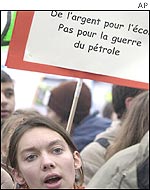
| | Sunday, 8 December, 2002, 16:43 GMT Thousands join Paris teachers' march 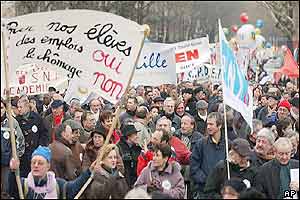 Demonstrators want more money for education Thousands of French teachers, students and members of parents' organisations have been marching through Paris to protest against the policies of the centre-right government of Prime Minister Jean-Pierre Raffarin.
The BBC's Hugh Schofield in Paris says the grumblings in the French public sector are now moving into schools and universities, with teachers accusing the government of downgrading education as a national priority. Traditionally allied to the left in France, the teachers say the government is cutting the jobs of thousands of supervisors and assistants, just when the issue of violence in schools is becoming more pressing. And they believe plans by Mr Raffarin to decentralise power to the regions is a threat to the much-cherished uniformity of the school system, because local authorities rather than central government would be responsible for part of the financing. 'No time for education' Demonstrators walked through central Paris led by the leaders of the five main teachers' unions organising the protest, causing traffic jams in much of the city.
"This government has got no time for education at all," said union leader Denis Plaget. "They are cutting jobs in education, research and culture - they are like Raffarin's unwanted children." Nicole Geneix of the Unitarian Trade Union Federation (FSU) warned the government not to let education be neglected. "We want to show that keeping a priority on education is a credible choice," she said. "We will not give up and we ask the government to do the same." Literacy failure Our correspondent says France still takes great pride in its public education system, but it is widely acknowledged that problems are growing. Education Minister Luc Ferry said recently that 160,000 pupils left every year with no qualification, while more than 15% of 11-year-olds failed to meet literacy and numeracy requirements. His argument, though, is that it is not just a question of money, and resources need to be more wisely spent and more closely tied to results. | | See also:  26 Nov 02 | Europe 26 Nov 02 | Business 22 Nov 02 | Business Internet links: The BBC is not responsible for the content of external internet sites Top Europe stories now: Links to more Europe stories are at the foot of the page. | ||||||||||||||||||||||||||||||||||||||||||||||||||||||||||||||||||||||||||||||||||||||||||||||||||||||||||||||||||||||||||||||||||||||||||||||||||||||||||||||||
| |
|  E-mail this story to a friend E-mail this story to a friend |
| |
| Links to more Europe stories |
| | | ||
 | ||||
 | | Back to top
| ||
| ---------------------------------------------------------------------------------- To BBC Sport>> | To BBC Weather>> | To BBC World Service>> ---------------------------------------------------------------------------------- © MMIII | News Sources | Privacy |