|
 |
 | | | | | | |||||||||||||||||||||||||||||||||||||||||||||||||||||||||||||||||||||||||||||||||||||||||||||||||||||||||||||||||||||||||||||||||||||||||||||||||||||||||||||||||||||||||
| | | You are in: Europe | |||||||||||||||||||||||||||||||||||||||||||||||||||||||||||||||||||||||||||||||||||||||||||||||||||||||||||||||||||||||||||||||||||||||||||||||||||||||||||||||||||||||||||
|
| | Thursday, 7 November, 2002, 14:56 GMT Balkan arms sales plot thickens 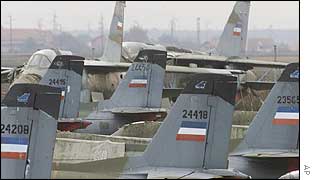 There may be a Balkan-wide network of arms traders
Just as Yugoslavia and Bosnia were beginning to rehabilitate themselves in the eyes of the outside world as respectable democratic states, suddenly evidence emerges of ties to the some of the world's most unsavoury regimes. Newly uncovered evidence suggests that they have been selling, or trying to sell, arms to Iraq, Liberia and Burma.
The row has exposed divisions within the Yugoslav establishment - between a government trying, however haltingly, to reform, and a military which remains largely outside its control. The Yugoslav Interior Minister, Zoran Zivkovic, has accused the military of deliberately keeping quiet about its deals with Baghdad. Last week, the government admitted that Jugoimport, a state-owned weapons company, had violated the Iraq embargo by refurbishing jet engines and providing other services. Part of the difficulty lies with the limited civilian control over Yugoslavia's military. MiG aircraft sales When Slobodan Milosevic was ousted from power two years ago, the coalition which replaced him left the military more or less untouched.
When Nato-led peacekeepers raided Orao last month, they found documents detailing the trade with Iraq, mainly the refurbishment of old MiG21 and MiG23 aircraft. Both the Yugoslav and Bosnian Serb governments moved fast to contain the affair, sacking company managers and government ministers. The Americans have applauded their actions, while adding that full investigations must follow. The Yugoslav Government blamed the illegal trade on a few corrupt individuals and imprecise laws that left loopholes. It promised to punish those responsible and fully suspend any co-operation with Iraq. Burma sales But there may be more to come. Yugoslavia has admitted it sent at least one shipment of arms to the West African state of Liberia, which is also under a UN weapons embargo.
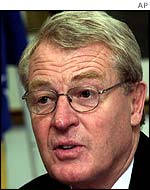
Separately, the Bosnian Serb Prime Minister, Mladen Ivanic, has now admitted that his officials were trying to sell weapons to Burma, which is also under weapons embargoes by the US and the European Union, although not the UN. Mr Ivanic said his defence minister and chief of staff were simply trying to offload some of the surplus weapons left over from Bosnia's 1992-95 war. He said his officials were not aware of the weapons embargoes; when they found out, the negotiations were halted. That drew a swift response from the international community in Bosnia. The chief international mediator, Lord Paddy Ashdown, called for those responsible for the arms deals to be held to account. "If the persons involved in the affair do not take over the responsibility, then the RS [Republica Srpska/Bosnian Serb Republic] officials and institutions have to ensure it," Lord Ashdown said on a visit to the Bosnian Serb capital, Banja Luka, on Monday. "If they do not do it, I will use my authorities to face them with the responsibility." The Bosnian Serbs have until 27 November to complete their investigations. Croatia ship Bosnia's other half, the Muslim-Croat Federation, is also under the spotlight, with nine companies undergoing checks to see whether they have sold weapons to Iraq. And in neighbouring Croatia, a ship owned by a Yugoslav citizen remains impounded in the port of Rijeka. The Boka Star was seized by customs officials two weeks ago, on suspicion of transporting military equipment to Iraq. The ship, which sails under the flag of Tonga, was found to be carrying 200 tonnes of what Croatian and US officials believe to be solid rocket fuel. Documents listed the cargo as charcoal, and stated its destination as Syria. Investigations are still going on to determine the Boka Star's final destination, and whether it could have been used in the past to ship weapons to Iraq. Military legacy The picture is still murky, but across the former Yugoslavia, a few parts of the pattern are beginning to become clear. This is the legacy of a decade of war and instability, of weak governments, a strong military, and a painful process of transition. Before 1990, when the process of disintegration began, Yugoslavia had one of the largest armies in Europe, with a network of weapons factories to match. There are hundreds of thousands of small arms washing around the Balkans, many of them illegally held. The governments in the region are committed, with varying degrees of credibility and enthusiasm, to reform. But sufficient holdovers from the past remain that it would not be surprising if further dubious arms sales came to light. | | See also:  31 Oct 02 | Europe 29 Oct 02 | Europe 29 Oct 02 | Europe 27 Oct 02 | Europe 23 Oct 02 | Europe 20 Oct 02 | Europe 10 Sep 02 | Europe Internet links: The BBC is not responsible for the content of external internet sites Top Europe stories now: Links to more Europe stories are at the foot of the page. | |||||||||||||||||||||||||||||||||||||||||||||||||||||||||||||||||||||||||||||||||||||||||||||||||||||||||||||||||||||||||||||||||||||||||||||||||||||||||||||||||||||||||
| |
|  E-mail this story to a friend E-mail this story to a friend |
| |
| Links to more Europe stories |
| | | ||
 | ||||
 | | Back to top
| ||
| ---------------------------------------------------------------------------------- To BBC Sport>> | To BBC Weather>> | To BBC World Service>> ---------------------------------------------------------------------------------- © MMIII | News Sources | Privacy |