|
 |
 | | | | | | |||||||||||||||||||||||||||||||||||||||||||||||||||||||||||||||||||||||||||||||||||||||||||||||||||||||||||||||||||||||||||||||||||||||||||||||||||||||||||||||||||||||||||||||
| | | You are in: Europe | |||||||||||||||||||||||||||||||||||||||||||||||||||||||||||||||||||||||||||||||||||||||||||||||||||||||||||||||||||||||||||||||||||||||||||||||||||||||||||||||||||||||||||||||||
|
| | Monday, 4 November, 2002, 17:31 GMT Yugoslavia fights genocide case 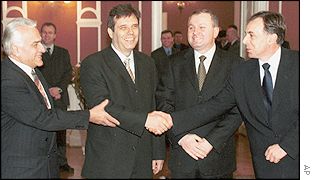 Kostunica has tried to rebuild ties with Bosnia Yugoslavia has told the United Nations' highest legal body - the World Court - that it should not have to answer charges of genocide brought by Bosnia. The accusation has been brought by Bosnia over the siege of Sarajevo - where thousands of civilians died - and other killings in the war. Yugoslavia says the court has no jurisdiction in the case, because at the time of the deaths, Belgrade was not a UN member or a party to the Geneva Convention. The court has previously ruled that it does have a say in the affair - but Belgrade is now seeking to persuade judges in The Hague to reverse their decision.
The case is complex, because Yugoslavia was a UN member before it began breaking up in the 1990s. Its lawyers are hoping to prove that, because Yugoslavia was officially readmitted in its slimmed-down form in 2000, the war years cannot be seen as a period of membership or accountability. Bosnia, which will put its case on Tuesday, argues that Yugoslavia's defence is irrelevant. Long process The court has already stated that as the former Yugoslavia did sign the Genocide Convention in 1948, both Bosnia and the present Yugoslavia are still bound by it. Nevertheless, the court has agreed to hear Yugoslavia's latest argument on the grounds that it could be a decisive factor in establishing the court's jurisdiction. If the judges stand by their decision to deal with the case, no early progress is expected. It will probably be next year before a decision on hearing the case, and the case itself would be some time after that. Precedent Cases before the International Court of Justice are often complex and intricate but in this instance the application of the Genocide Convention is an important issue of fine legal precision. The BBC's Geraldine Coughlan in The Hague says the outcome will serve as a precedent in courts and tribunals dealing with future cases of international humanitarian law. The World Court - officially titled the International Court of Justice - is separate from the international war crimes tribunal, also in The Hague, where war crimes accusations from the former Yugoslav are also being heard. | |
See also:  15 Jul 02 | Europe 19 Jan 01 | Europe 22 Oct 00 | Europe 22 Oct 00 | Europe 19 Jan 01 | Europe Internet links: The BBC is not responsible for the content of external internet sites Top Europe stories now: Links to more Europe stories are at the foot of the page. | |||||||||||||||||||||||||||||||||||||||||||||||||||||||||||||||||||||||||||||||||||||||||||||||||||||||||||||||||||||||||||||||||||||||||||||||||||||||||||||||||||||||||||||||
| |
|  E-mail this story to a friend E-mail this story to a friend |
| |
| Links to more Europe stories |
| | | ||
 | ||||
 | | Back to top
| ||
| ---------------------------------------------------------------------------------- To BBC Sport>> | To BBC Weather>> | To BBC World Service>> ---------------------------------------------------------------------------------- © MMIII | News Sources | Privacy |