|
 |
 | | | | | | ||||||||||||||||||||||||||||||||||||||||||||||||||||||||||||||||||||||||||||||||||||||||||||||||||||||||||||||||||||||||||||||||||||||||||||||||||||||||||||||||
| | | You are in: Europe | ||||||||||||||||||||||||||||||||||||||||||||||||||||||||||||||||||||||||||||||||||||||||||||||||||||||||||||||||||||||||||||||||||||||||||||||||||||||||||||||||||
|
| | Wednesday, 18 September, 2002, 12:13 GMT 13:13 UK Q&A: Why the pipeline matters As the foundation stone is laid of a pipeline to take oil from the Caspian to the Mediterranean, BBC News Online asks what difference it will make to the region and to the rest of the world.
What is new about this pipeline? The most important thing about it is its size. Azerbaijan already has two pipelines linking it to the Black Sea, but this one has a much larger capacity, and it goes all the way to the Mediterranean. Click here to see a map of the pipeline route It will pump one million barrels of Caspian oil per day to a port in easy reach of international markets. And it is the first major export pipeline to take oil from the Caspian region to the West, without going through Russia. Why is it so important to avoid Russia? It has been a major foreign policy of US governments over the last 10 years to help the Caspian states avoid dependence on Russia.
This is no longer the case, but the countries of the region still do not want Moscow's hand on the tap of their main source of income. Washington sympathises, and wants to strengthen the role in the region of Nato-member Turkey. Why has it taken so long - eight years - to get the pipeline started? All the countries involved were keen on the idea from the start, but the oil companies needed persuading. In the early 1990s, there was a Caspian oil boom, as Western companies moved into the area for the first time in nearly a century. However, enthusiasm waned after several exploratory wells found no major new reserves. The gloom increased in the late 1980s, when the international price of oil fell to within a hair's breadth of the cost of production and transportation from the Caspian. Now the oil companies have decided that there is, after all, enough oil in Azerbaijan to pay back the $3bn cost of the pipeline. They are probably also hoping that oil producers in Kazakhstan will choose to export some of their crude via this route. Why didn't the companies just enlarge the existing pipeline to the Georgian port of Supsa? This was an option that they considered long and hard, because it would have been much cheaper. One of the disadvantages of a Black Sea outlet is that oil tankers then have to pass through the Bosphorus. Turkey has long threatened to restrict the passage of tankers through this narrow channel. The oil companies themselves accept that there are good environmental reasons for this, and they know there is a practical limit to the number of tankers that can use the straits. If the oil companies had chosen a Black Sea port instead of Ceyhan, Turkey could have retaliated by squeezing the Bosphorus even tighter. What will be the impact be on world oil markets? Economically, not massive. Caspian oil production is edging upwards, but is dwarfed by Russia's exports, which have also been increasing. Between them they blunt, slightly, the power of the Opec oil cartel. Politically - and particularly in the US - the Caspian is viewed as an important new source of energy for the 21st Century. It is part of a general effort to diversify sources of oil, reducing reliance on the periodically unstable Gulf. 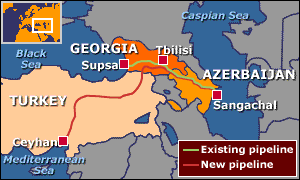 | | See also:  18 Sep 02 | Europe 30 Sep 01 | Europe 25 Jul 01 | Business 17 Sep 02 | Europe 21 Aug 02 | Country profiles 01 Sep 02 | Country profiles Internet links: The BBC is not responsible for the content of external internet sites Top Europe stories now: Links to more Europe stories are at the foot of the page. | ||||||||||||||||||||||||||||||||||||||||||||||||||||||||||||||||||||||||||||||||||||||||||||||||||||||||||||||||||||||||||||||||||||||||||||||||||||||||||||||||
| |
|  E-mail this story to a friend E-mail this story to a friend |
| |
| Links to more Europe stories |
| | | ||
 | ||||
 | | Back to top
| ||
| ---------------------------------------------------------------------------------- To BBC Sport>> | To BBC Weather>> | To BBC World Service>> ---------------------------------------------------------------------------------- © MMIII | News Sources | Privacy |