|
 |
 | | | | | | |||||||||||||||||||||||||||||||||||||||||||||||||||||||||||||||||||||||||||||||||||||||||||||||||||||||||||||||||||||||||||||||||||||||||||||||||||||||||||||||||
| | | You are in: Europe | |||||||||||||||||||||||||||||||||||||||||||||||||||||||||||||||||||||||||||||||||||||||||||||||||||||||||||||||||||||||||||||||||||||||||||||||||||||||||||||||||||
|
| | Wednesday, 18 September, 2002, 15:36 GMT 16:36 UK Caspian oil project forges ahead 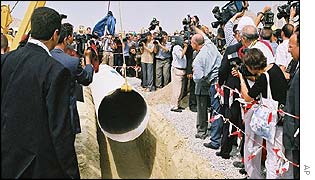 The pipeline is the first to bypass Russian territory Construction work has officially been launched on a multi-billion-dollar pipeline to take Caspian Sea oil from Azerbaijan to Turkey via Georgia.
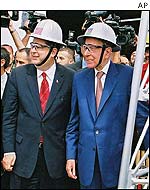
The Turkish and Georgian presidents, along with their Azeri counterpart, took part in a ceremony to lay the inaugural section of the pipeline at the Sangachal terminal, near the Azeri capital, Baku. "This project guarantees peace, security and stability in the region, and still further unites three countries and three peoples", Azerbaijan's President Haidar Aliev said. The three regional leaders were joined by American Energy Secretary Spencer Abraham, whose presence signalled the US Government's strong support for the project.
He said such projects would contribute regional strength and international energy security for mutual benefit. But speaking in New York ahead of the ceremony in Azerbaijan, Russian Foreign Minister Igor Ivanov said oil supplies coming from the Caspian were not sufficient to make the project economically viable. And he warned against efforts to exclude Russia from regions where he said it had historical interests. Political considerations The Caspian Sea is thought to hold the world's third largest oil and gas reserves - much of it still untapped.
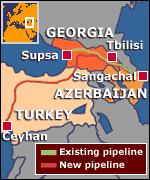
The project was first proposed eight years ago, but has been delayed by arguments about whether enough oil will flow through the pipeline to make it financially viable. The line is intended to transport more than a million barrels a day from Azerbaijan's oil fields through the Caucasus republic of Georgia to the Turkish port of Ceyhan. The 1,750 kilometre (1,090 mile) pipeline to the Mediterranean was chosen in preference to two other routes to the Gulf, or the Black Sea, which would have taken the oil via Iran or Russia. Both would have been shorter and cheaper, but were not politically acceptable to Washington. Construction of the pipeline, which is estimated to cost about $3bn, is expected to be completed by early 2004, with pumping of oil due to begin the following year. It is thought that the pipeline will eventually transport oil from Kazakhstan, too. | | See also:  18 Sep 02 | Europe 17 Sep 02 | Europe 30 Sep 01 | Europe 12 Mar 01 | Europe 27 Jul 01 | Europe 25 Jul 01 | Business 13 Nov 97 | West Asia Internet links: The BBC is not responsible for the content of external internet sites Top Europe stories now: Links to more Europe stories are at the foot of the page. | |||||||||||||||||||||||||||||||||||||||||||||||||||||||||||||||||||||||||||||||||||||||||||||||||||||||||||||||||||||||||||||||||||||||||||||||||||||||||||||||||
| |
|  E-mail this story to a friend E-mail this story to a friend |
| |
| Links to more Europe stories |
| | | ||
 | ||||
 | | Back to top
| ||
| ---------------------------------------------------------------------------------- To BBC Sport>> | To BBC Weather>> | To BBC World Service>> ---------------------------------------------------------------------------------- © MMIII | News Sources | Privacy |