|
 |
 | | | | | | ||||||||||||||||||||||||||||||||||||||||||||||||||||||||||||||||||||||||||||||||||||||||||||||||||||||||||||||||||||||||||||||||||||||||||||||||||||||||||||||||||||||||||||||||||||||||||||||||||||||||||||||||||
| | | You are in: Europe | ||||||||||||||||||||||||||||||||||||||||||||||||||||||||||||||||||||||||||||||||||||||||||||||||||||||||||||||||||||||||||||||||||||||||||||||||||||||||||||||||||||||||||||||||||||||||||||||||||||||||||||||||||||
|
| | Friday, 9 August, 2002, 13:16 GMT 14:16 UK The chess match of the century 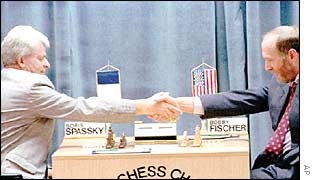 Spassky and Fischer played a rematch in 1992
Thirty years ago, a board game of 64 squares and 32 pieces captured headlines across the globe. It was the World Championship chess match between the challenger Bobby Fischer, an eccentric American genius, and the Soviet title-holder, Boris Spassky.
The so-called chess match of the century came to be seen as a proxy for the Cold War. The Soviets had held the world title since World War II. Political microcosm For them, chess was the ultimate proof of communist superiority over capitalism. One man would challenge that. The lanky six-foot, socially-inept, 29-year-old, semi-paranoid monomaniac from New York, Robert J Fischer. "It's the apex of my life," said Fischer. "My whole career has been building up to this one point. This is really the big match. Even this little thing with me and Spassky is sort of a microcosm of the whole world political situation". Bobby Fischer hated the Soviets with a passion. "Their attitude should be: 'Well, if he's the best, he should have the title'. But that's not their attitude. They don't believe in giving foreigners a chance to play for the title".
But would he actually turn up in Iceland? His list of demands - about the conditions, the noise, the exact shade and millimetre length of the squares on the board - grew longer each day. 'Graceless and rude' Fischer finally agreed to play when the British millionaire financier Jim Slater stepped in to double the prize to a quarter of a million dollars, an act of generosity for which he was never thanked. "Fischer is known to be graceless, rude, possibly insane. I really don't worry about that, because I didn't do it for that reason," says Mr Slater. "I didn't do it because he was polite; I didn't do it because he was graceful. I did it because he was going to challenge the Russian supremacy, and it was good for chess". It was only the beginning of the drama. The referee defaulted Fischer in game two when the temperamental American complained about the TV cameras. He stayed in his bedroom, refusing to play. Two points up, Boris Spassky was now favourite. Referee Lothar Schmid feared Fischer would walk out of the match - and out of chess - forever. "I remember, that night, when I had woken up, I had tears in my eyes - my face was full of tears - because I had the feeling that perhaps I could have destroyed a genius," Mr Schmid said. Disappeared hero The contest continued after US National Security Advisor Henry Kissinger phoned Bobby Fischer, urging him to play for America.
Bobby Fischer, the individual who had triumphed over the might of the communist system, was an American hero. And then, he simply disappeared, declining all lucrative sponsorship deals. He resurfaced briefly in 1992, to play a rematch with Spassky for $5m. And then he was gone again. He is thought now to be in Japan. But his match in 1972 did the nigh-impossible - it made chess fashionable, even sexy. The game was never to be the same again. | |
See also:  09 Sep 01 | UK Top Europe stories now: Links to more Europe stories are at the foot of the page. | ||||||||||||||||||||||||||||||||||||||||||||||||||||||||||||||||||||||||||||||||||||||||||||||||||||||||||||||||||||||||||||||||||||||||||||||||||||||||||||||||||||||||||||||||||||||||||||||||||||||||||||||||||
| |
|  E-mail this story to a friend E-mail this story to a friend |
| |
| Links to more Europe stories |
| | | ||
 | ||||
 | | Back to top
| ||
| ---------------------------------------------------------------------------------- To BBC Sport>> | To BBC Weather>> | To BBC World Service>> ---------------------------------------------------------------------------------- © MMIII | News Sources | Privacy |