|
 |
 | | | | | | ||||||||||||||||||||||||||||||||||||||||||||||||||||||||||||||||||||||||||||||||||||||||||||||||||||||||||||||||||||||||||||||||||||||||||||||||||||||||||||||||||||||||
| | | You are in: Europe | ||||||||||||||||||||||||||||||||||||||||||||||||||||||||||||||||||||||||||||||||||||||||||||||||||||||||||||||||||||||||||||||||||||||||||||||||||||||||||||||||||||||||||
|
| | Friday, 24 May, 2002, 22:25 GMT 23:25 UK Germany acts over Euro 'rip-offs' Consumers have complained about price hikes
The German Government is moving to defuse rising public anger over euro-inspired price rises by holding an emergency summit of retailers and catering organisations.
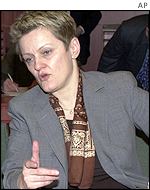
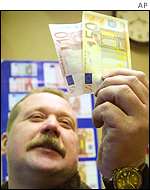
Since the euro's launch on New Year's day, consumer groups have been inundated with complaints about traders using the switch from deutschmarks to disguise price mark-ups. Now, the government fears public concern over the euro is hurting the German economy. The euro summit has been called by Consumer Minister Renate Kuenast. Top representatives of Germany's retail and restaurant industries will have to answer charges that many of their members used the euro switchover to hike prices. Dramatic price hikes Mrs Kuenast's initiative follows months of dithering by the government.
Initially, ministers denied there was any euro-induced inflation. But in recent weeks, they have conceded that while overall inflation has been falling, the prices of some food items and local services have risen dramatically. Almost everybody, it seems, has spotted a rip-off at their local corner shop or bar. There have been many anecdotal reports of traders simply switching the currency sign from marks to euros, equivalent to an almost 100% rise. Because these local prices are the ones people notice most, their impact on consumer confidence has been greater than their statistical significance. Reluctant consumers Many economists believe the euro effect is slowing Germany's recovery from recession because wary consumers are reluctant to spend. So far, the modest economic upturn has been almost entirely export-led. Mrs Kuenast's summit call has been greeted with indignation by retailers who insist German food prices are among the lowest in Europe. One industry leader said the move suggested the government had lost faith in the market economy. With national elections just four months away, critics suspect the meeting next Friday is a largely cosmetic exercise. It is unclear what scope for action the government has. It has rejected calls to follow the example of some other countries - such as France and Austria - where euro-linked price rises are illegal. | | See also:  23 May 02 | Business 22 May 02 | Business 03 Jan 02 | Business Internet links: The BBC is not responsible for the content of external internet sites Top Europe stories now: Links to more Europe stories are at the foot of the page. | ||||||||||||||||||||||||||||||||||||||||||||||||||||||||||||||||||||||||||||||||||||||||||||||||||||||||||||||||||||||||||||||||||||||||||||||||||||||||||||||||||||||||
| |
| Links to more Europe stories |
| | | ||
 | ||||
 | | Back to top
| ||
| ---------------------------------------------------------------------------------- To BBC Sport>> | To BBC Weather>> | To BBC World Service>> ---------------------------------------------------------------------------------- © MMIII | News Sources | Privacy |