
|
 |
 | | | | | | |||||||||||||||||||||||||||||||||||||||||||||||||||||||||||||||||||||||||||||||||||||||||||||||||||||||||||||||||||||||||||||||||||||
| | | You are in: Entertainment | |||||||||||||||||||||||||||||||||||||||||||||||||||||||||||||||||||||||||||||||||||||||||||||||||||||||||||||||||||||||||||||||||||||||
|
| | Tuesday, 15 October, 2002, 13:25 GMT 14:25 UK Poll shows support for Marbles return 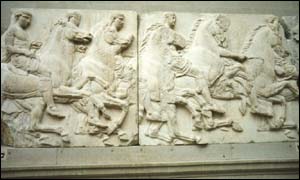 The Marbles were brought to the UK in 1799 British people would strongly back the return of the Parthenon Marbles to Greece under certain conditions, according to a survey. At least twice as many people polled felt that the artworks should be returned to Athens, compared with those who wanted them to remain in the UK.
The figures are almost identical to a similar poll conducted in 1988. But 56% of people felt the marbles, also known as the Elgin Marbles, should be housed in Greece - compared with 7% of people who felt they should stay if at least one of five conditions were met. The conditions were: According to the British Committee for the Restitution of the Parthenon Marbles, the Greek Government has agreed to meet each one of the conditions. Liberal Democrat MP Richard Allan, who supports the return of the Marbles, said the survey had undermined arguments that it would mean they were no longer accessible to British people. He said: "One of the most startling figures which came out of the survey was that 4% of the British people have visited the sculptures which are in Athens and only 9% had been to see those in the British Museum." The committee has now called on the UK Government to discuss the return of the artworks to Greece. It believes they can be returned in time for the 2004 Olympic Games in Athens. The 56 sculpted friezes were sent to the British Museum after their removal from Greece during Ottoman Turkish rule. Friezes They date from between 447 and 432 BC and depict the most formal religious ceremonies of ancient Athens - the Panathenaea procession. In 1799 the British ambassador to the Ottoman Empire, Lord Elgin, removed the friezes and brought them to the UK. "There is now widespread public support in Britain for bringing together all the sculptures of the Parthenon," said a statement released by the committee. More than 2,000 people were questioned for the poll. A spokesman for the British Museum said its position was unchanged. "We have five million visitors a year from around the globe. The point of the museum is that it enables anybody to explore the past and understand the present wherever they come from." | | See also:  17 Jan 02 | Entertainment 15 Jan 02 | Entertainment 30 Nov 99 | UK 16 Jan 02 | Entertainment Top Entertainment stories now: Links to more Entertainment stories are at the foot of the page. | |||||||||||||||||||||||||||||||||||||||||||||||||||||||||||||||||||||||||||||||||||||||||||||||||||||||||||||||||||||||||||||||||||||
| |
|  E-mail this story to a friend E-mail this story to a friend |
| |
| Links to more Entertainment stories |
| | | ||
 | ||||
 | | Back to top
| ||
| ---------------------------------------------------------------------------------- To BBC Sport>> | To BBC Weather>> | To BBC World Service>> ---------------------------------------------------------------------------------- © MMIII | News Sources | Privacy |




