
|
 |
 | | | | | | |||||||||||||||||||||||||||||||||||||||||||||||||||||||||||||||||||||||||||||||||||||||||||||||||||||||||||||||||||||||||||||||||||||||||||||||||||||||||
| | | You are in: Business | |||||||||||||||||||||||||||||||||||||||||||||||||||||||||||||||||||||||||||||||||||||||||||||||||||||||||||||||||||||||||||||||||||||||||||||||||||||||||||
|
| | Tuesday, 24 December, 2002, 10:09 GMT Inside the Bentley factory  The Bentley "sweetshop" excites customers
An impressive selection of multi-coloured Bentleys greet us as we enter the factory that has been building Bentley motor cars for decades.
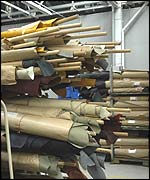
Beyond the bulky Bentley bodies, and despite the factory's size, this part of the manufacturing plant feels more like a workshop than a car factory. Of the 2,500-strong Bentley labour force, 1,000 people work in "wood or trim", says Mr Maddock. "Compared with some other car manufacturers, it's quite sedate, really," he observes. Leather and trim As we move further into the factory, an overpowering smell of leather is rising from large rolls and piles of full-size cow hides that are about to be cut into smaller sizes.
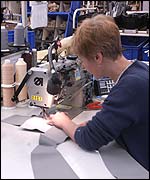
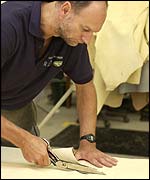
Nearby, a row of women operate old-fashioned Singer sewing machines, stitching deadly accurate seams which shape the leather into lush seat and headrest covers. Slicing away excess edging with a razor-sharp small knife, "trimming lady" Helen Cowling is adamant. "No drink," she quips. Active sales force The atmosphere is pleasant, and so are the workers.
Whenever we halt to look more closely at their work, they stop to explain what they are doing. Prospective Bentley customers often visit the factory. They like to know what they are buying. And they like to make their mark. Steering wheels signed by the footballer David Beckham and the singer Cliff Richard are prominently displayed. "We enjoy celebrity endorsement of our products as much as anybody," says Richard Charlesworth, the man customers talk to if they want their Bentleys personalised. "We have customers asking us for things no marketing department could imagine," his boss John Killick, director of Bentley Mulliner, adds. Light wood "One customer even wanted to come and cut his own veneer," Mr Maddock says as he introduces us to his own team.
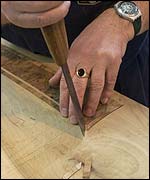
Mr Maddock explains the difference between veneer made from Amboyna - Indonesian and very expensive - and Burr Walnut - made from the root of a Californian fruit tree. Or Madrona, Vavona, or Birdseye Maple. Most veneers are stored in a special moisture cupboard in order to make them easier to shape. Bentley buyers can choose any wood they like, though "some veneers are avoided if they are environmentally unsound, or if they don't work with our paint process", Mr Maddock explains. In recent years, many buyers have chosen light wood veneer which looks more contemporary than some of the darker woods, he observes. Building car bodies At last we get to see where the large steel body panels, which have been pressed by Mayflower, are put together.
So these days, no aluminium is used. There is only one presser in the whole factory, the one that puts together the body skin and the inner frame. Each of the shiny silver bodies is carefully inspected, and any faults are scribbled directly onto the panels with thick felt tip pens, before the car is sent back for further work. German parts On entering the engine room, we are met by deadly silence. The workers are on their tea break, explains Mr Maddock.
"The engine components come from Germany," says Dough Dickson, board member responsible for manufacturing. "But we build the engines here." Bentley's German parent Volkswagen has pushed through some other changes too, as part of a modest modernisation process. This time the changes can be seen in the paint shop. "We used to spray by hand, we now spray by robot," Mr Maddock says. And finally, the cars glide down the assembly line where seats and steering wheels, stereos and trim are fitted. Breaking Bentleys VW has also earmarked large chunks of its investment for quality and logistics improvements. The quality testing is done in the laboratory where a selection of curious machines are stretching seat leather, rubbing floor carpets and exposing car bodies to hours of hot, salt mist. Insisting that his measuring machines are so accurate they can "measure the weight of a finger print", lab manager John Minshull is adamant. "If we can't break the parts here, they will survive when the customers get to them." Beyond using such wrecking machines, Bentley's lab technicians also resort to more instinctive measuring methods. Individual parts are "smell-tested to make sure they smell like a Bentley should", Mr Minshull says. | | See also:  27 Sep 02 | Business 16 Sep 02 | England 07 Mar 02 | Business 06 Mar 02 | Business 07 Jan 02 | England 20 Dec 01 | England 23 Nov 01 | Business 19 Oct 01 | Business Top Business stories now: Links to more Business stories are at the foot of the page. | |||||||||||||||||||||||||||||||||||||||||||||||||||||||||||||||||||||||||||||||||||||||||||||||||||||||||||||||||||||||||||||||||||||||||||||||||||||||||
 | |
|  E-mail this story to a friend E-mail this story to a friend |
| |
| Links to more Business stories |
| | | ||
 | ||||
 | | Back to top
| ||
| ---------------------------------------------------------------------------------- To BBC Sport>> | To BBC Weather>> | To BBC World Service>> ---------------------------------------------------------------------------------- © MMIII | News Sources | Privacy |






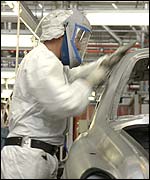
 If we can't break the parts here, they will survive when the customers get to the