|
 |
 | | | | | | |||||||||||||||||||||||||||||||||||||||||||||||||||||||||||||||||||||||||||||||||||||||||||||||||||||||||||||||||||||||||||||||||||||||||||||||||||||||||
| | | You are in: Business | |||||||||||||||||||||||||||||||||||||||||||||||||||||||||||||||||||||||||||||||||||||||||||||||||||||||||||||||||||||||||||||||||||||||||||||||||||||||||||
|
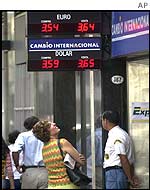
| | Monday, 9 December, 2002, 13:29 GMT Argentine bank chief quits 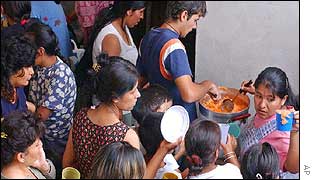 Argentines are suffering soaring rates of poverty The head of Argentina's Central Bank, Aldo Pignanelli, has resigned in the midst of the country's worst economic crisis in history. He had twice previously threatened to step down, following repeated disagreements with the economy minister over policy issues and talks with the International Monetary Fund (IMF) - most recently last Thursday. But this time Mr Pignanelli's resignation was accepted by Argentina's President Eduardo Duhalde.
More than half of the country's 36 million people are living in poverty, and hunger has become a serious problem in what is one of the world's largest agricultural exporters. Last month, Argentina said it could not meet its obligations with the World Bank and made only an interest payment of $79.2m rather than the $805m due. IMF conditions Argentine media reported that Mr Pignanelli was in favour of making a repayment - even if it meant using the country's reserves - but that Economy Minister Roberto Lavagna opposed the move. He was also in favour of continuing to defend the value of Argentina's currency, the peso, which has fallen by 70% since it was delinked to the dollar just under one year ago. Mr Pignanelli was appointed as central bank chief in June after the resignation of Mario Blejer, who lasted six months in the post. The Argentine media suggest that Jorge Levy, a supporter of President Duhalde on the central bank's Board of Directors, will be appointed as his successor. The World Bank and the IMF have said there will be no more aid for Argentina unless it meets a December deadline for repayment. The IMF is demanding that Argentina put in place a programme of economic reform before agreeing to extend new loans. Opening up bank deposits At the core of the economic disagreement, however, was the plan by the government to allow people to again draw unlimited funds from their bank accounts, which have been partly frozen since the crisis began. This would mean that many people would be tempted to take money out of the country and put it into safer currencies like the US dollar, causing the value of the peso to fall still further. However, as the April Presidential elections draw closer, the hardship caused by the bank closures was bound to put pressure on that policy, which was advocated by the central bank. The final straw occurred when the central bank was ordered to lend money to a state government bank to ensure that it could meet all the demands of its depositors for withdrawals. | |
See also:  04 Dec 02 | Americas 20 Nov 02 | Business 16 Nov 02 | Business 06 Nov 02 | Crossing Continents Internet links: The BBC is not responsible for the content of external internet sites Top Business stories now: Links to more Business stories are at the foot of the page. | |||||||||||||||||||||||||||||||||||||||||||||||||||||||||||||||||||||||||||||||||||||||||||||||||||||||||||||||||||||||||||||||||||||||||||||||||||||||||
| |
|  E-mail this story to a friend E-mail this story to a friend |
| |
| Links to more Business stories |
| | | ||
 | ||||
 | | Back to top
| ||
| ---------------------------------------------------------------------------------- To BBC Sport>> | To BBC Weather>> | To BBC World Service>> ---------------------------------------------------------------------------------- © MMIII | News Sources | Privacy |