
|
 |
 | | | | | | |||||||||||||||||||||||||||||||||||||||||||||||||||||||||||||||||||||||||||||||||||||||||||||||||||||||||||||||||||||||||||||||||||||||||||||||||||||
| | | You are in: Business | |||||||||||||||||||||||||||||||||||||||||||||||||||||||||||||||||||||||||||||||||||||||||||||||||||||||||||||||||||||||||||||||||||||||||||||||||||||||
|
| | Friday, 29 November, 2002, 14:59 GMT Pakistan targets export market 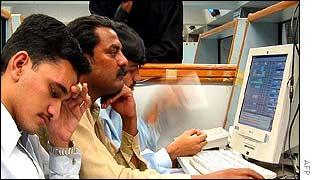 Pakistan is aiming to boost trade
Pakistan is planning to go all out to boost its exports.
Humayun Akhtar Khan promised that greater access to American and European markets and diversification of Pakistan's export base would be the government's top trade priorities. "Despite getting closer to $10 billion mark in recent years, Pakistan has never been able to achieve this export target. "The aim of our government will be to break the record during our first year in office," he said. 'Not an easy task' Analysts point out that the basic flaw with Pakistan's export strategy has been its heavy reliance on textile products. And Pakistan's export market is largely restricted to a few western markets, namely the United States and the European Union. "With the US and EU firmly sticking to their respective textile quota restriction policies, there is little room left for Pakistan to improve its export earnings," says Arshad Arif, a Karachi-based market analyst. Talking to BBC from his Islamabad office, Mr Khan admitted that the task before the government was not an easy one. But he said the government would be actively exploring new markets for existing Pakistani exports such as textiles, while encouraging exports of non-traditional products such as fruit and vegetables. Rebuilding confidence In the past, Pakistani exporters have complained of bureaucratic red tape, inconsistency in government policy and sometimes harassment by the tax officials. The new commerce minister said many of these complaints were justified. But he said that changes begun under the Musharraf regime would continue. "During the last three years, the military government has brought significant macro-economic stability to the country but investment is still not forthcoming. "The challenge before us is to create the right kind of atmosphere to rebuild investor confidence." Mr Khan is an actuary by qualification. He is the son of a former Pakistani General and his family investments include businesses as diverse as sugar mills, textiles and beverages. He served as minister of investment in the government of prime minister Nawaz Sharif and takes over the key commerce ministry from another businessman Razzak Dawood, who headed the portfolio during General Pervez Musharraf's three year military rule. | | See also:  23 Nov 02 | South Asia 21 Nov 02 | South Asia 21 Nov 02 | South Asia Internet links: The BBC is not responsible for the content of external internet sites Top Business stories now: Links to more Business stories are at the foot of the page. | |||||||||||||||||||||||||||||||||||||||||||||||||||||||||||||||||||||||||||||||||||||||||||||||||||||||||||||||||||||||||||||||||||||||||||||||||||||
| |
|  E-mail this story to a friend E-mail this story to a friend |
| |
| Links to more Business stories |
| | | ||
 | ||||
 | | Back to top
| ||
| ---------------------------------------------------------------------------------- To BBC Sport>> | To BBC Weather>> | To BBC World Service>> ---------------------------------------------------------------------------------- © MMIII | News Sources | Privacy |






