|
 |
 | | | | | | |||||||||||||||||||||||||||||||||||||||||||||||||||||||||||||||||||||||||||||||||||||||||||||||||||||||||||||||||||||||||||||||||||||||||||||||||||||||||||||||||||||||||||||||||||||||
| | | You are in: Business | |||||||||||||||||||||||||||||||||||||||||||||||||||||||||||||||||||||||||||||||||||||||||||||||||||||||||||||||||||||||||||||||||||||||||||||||||||||||||||||||||||||||||||||||||||||||||
|
| | Tuesday, 26 November, 2002, 13:57 GMT UK store's beacon for fair trade 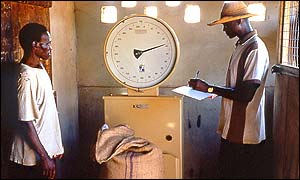 The tide is turning for some farmers (Picture: B. Moody)
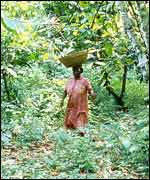
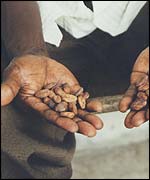
The world's major chocolate manufacturers are being challenged to pay fairer wages to Africa's poor chocolate farmers. This follows the signing of a contract between British supermarket chain, Co-op, which will double the amount of Fair Trade Chocolate on sale in the UK.  Villagers of SK Krom are producing cocoa for the world's lovers of chocolate. These villagers are better off than most. They're in a fair trade cooperative. They can plan their lives, they're paid a guaranteed price for their beans, they're protected from the fluctuating prices on the world commodity market and from often unscrupulous middlemen who promise one price - but pay another.
For uncertain returns, their beans are sold through a long supply chain to the international chocolate industry. The overwhelming majority of Ghana's cocoa farmers work for big business so decisions are imposed on them from above, not taken collectively at village level. And that's why after years of being slave to the unpredictable world cocoa market, Esther Amoah has opted for fair trade. She gets a fairer price for her labours. Esther is one of 40,000 producers who form the Kuapa Kokoo fair trade co-operative. Each earns a pittance - under $200 a year - but the price they get is always higher than the going rate on the world market. She has no electricity, no toilets, and there are no medical facilities for miles, but compared with conventional farmers, she feels well off. Clean water Speaking in the porch of her earthen brick and wood-built home, she said: "You can see I've now managed to paint my walls and our village now has a water pump, which we didn't have before."
Fair trade means playing fair. Previously the growers were often cheated. Middlemen under-weighed their sacks and underpaid the farmers. The scales were often fixed to show a lower reading than the actual weight. Esther said she wished that it wasn't just small, specialist companies that wanted fair trade beans in Europe. In fact, she was to be pleasantly surprised. Leaving the rainforest villages hundreds of miles away in Ghana's second city Kumasi, we witness a deal of historic importance to the Kuapa Kokoo farmers. From Manchester in the north of England representatives of a British high street supermarket chain came to break some news to expectant leaders of the Kuapa Kokoo co-operative. Terry Hudghton, of the UK Co-operative Group, made this announcement: "I'm here today to tell you of a momentous move. "The Co-op in the UK, with our 2,400 stores, is converting all its own brand blocks of chocolate to fair trade. It's a historic step and we're the first retailer in the world to do this." Basic facilities As the assembled Kuapa Kokoo members applauded, their managing director, Kwabena Ohemeng-Tinyase, said: "This is a dream come true for us. It is a major humanitarian measure.
Sales of fair trade chocolate in the UK are now set to double to �6m, but this is still a fraction of the overall �4bn chocolate market. Both Mr Ohemeng and the Co-op's Mr Hudghton, are appealing to the rest of the international chocolate industry to follow suit. Nestle, Cadbury's, Masterfoods, and Kraft Suchard all declined to give the BBC an interview, referring us to their trade association. Bob Eagle, of the Biscuit, Cake, Chocolate and Confectionary Alliance acknowledged that in the past cocoa farmers had not always been given the fairest of deals. Community initiatives But having endured some bad publicity in recent years, he was keen to stress that there was now a new mood afoot that would make a real difference in future. Contrary to the experience of the cocoa farmers we met, he said initiatives were underway to help Ghanaian communities. The industry isn't joining the fair trade camp. It is setting up social projects in West Africa and ensuring cocoa farmers had the means to diversify so they were no longer solely dependent on cocoa. The irony is that most farmers, like Esther, who have spent their lives producing cocoa, have never even tasted chocolate. Even if they could get to cities selling chocolate, they wouldn't be able to afford it. Their message to the prosperous consumers of chocolate in Europe is to demand that it's fair trade - because then they can supply it and benefit from it. | |
See also:  17 Oct 02 | Business 18 Sep 02 | Wales 18 Sep 02 | Business 17 Sep 02 | Business Internet links: The BBC is not responsible for the content of external internet sites Top Business stories now: Links to more Business stories are at the foot of the page. | |||||||||||||||||||||||||||||||||||||||||||||||||||||||||||||||||||||||||||||||||||||||||||||||||||||||||||||||||||||||||||||||||||||||||||||||||||||||||||||||||||||||||||||||||||||||
| |
|  E-mail this story to a friend E-mail this story to a friend |
| |
| Links to more Business stories |
| | | ||
 | ||||
 | | Back to top
| ||
| ---------------------------------------------------------------------------------- To BBC Sport>> | To BBC Weather>> | To BBC World Service>> ---------------------------------------------------------------------------------- © MMIII | News Sources | Privacy |