
|
 |
 | | | | | | |||||||||||||||||||||||||||||||||||||||||||||||||||||||||||||||||||||||||||||||||||||||||||||||||||||||||||||||||||||||||||||||||||||||||||||||||||||||
| | | You are in: Business | |||||||||||||||||||||||||||||||||||||||||||||||||||||||||||||||||||||||||||||||||||||||||||||||||||||||||||||||||||||||||||||||||||||||||||||||||||||||||
|
| | Saturday, 16 November, 2002, 00:53 GMT Germany acts to ease unemployment 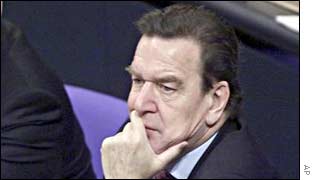 Schroeder is struggling to revive a weak economy
The lower house of the German Parliament, the Bundestag, has approved a set of measures aimed at reducing the country's high level of unemployment.
The plans, floated before the election, amount to a shake-up of the state-run job placement agencies, making them in effect temporary staffing agencies. The opposition says it will not help liberalise the economy and will add more regulation. The measures come at the end of a week of bad news for the German economy. A rebuke from Brussels over the growing budget deficit and a warning from a panel of economic experts that the German economy will not pick up without state welfare cuts has shocked voters. Slipping popularity It is less than two months since Chancellor Gerhard Schroeder's Red-Green coalition scraped home to a second term, despite unemployment of more than four million. But his popularity has slipped as one set of statistics after another has revealed an economy in crisis.
News of a $30bn hole in planned tax revenues was just the latest shock. The economy is expected to grow just .2% this year, only 1% next. Even some in the governing Social-Democratic Party (SPD) now want more radical reform: "Many of us feel that this will not be enough," says SPD deputy Rolf Hempelmann. "We probably need more reforms, also in the tax system, in our pensions system, in our social security system." The scale of the problem is awesome. The German healthcare system costs employees and workers more than 14% of wages. The pension system takes 19.5% of pay. Add to that an inflexible labour market and some of the highest non-wage labour costs in the world, and it is a recipe for economic stagnation and unemployment. 'Burned-out' Even the coalition Greens are growing impatient with the chancellor's lack of will to reform. But the talk is still of compromise. "We were very much aware, even the night of the victory, that the future would not be easy, that the situation of the economy is really very bad, that we have the big problem of unemployment in Germany," Green Party leader Claudia Roth says. "But we have a problem concerning the future of the social security system," she adds. "We need a consensus in our country, if not, we will face big problems." Some in his own party have described the chancellor as burned-out, exhausted by his re-election campaign. It was a grudging victory. Many observers doubt he has the necessary courage to reform the economy and question whether voters are prepared to pay the price. | | See also:  07 Nov 02 | Business 23 Sep 02 | Business 05 Sep 02 | Business 06 Aug 02 | Europe 09 Jul 02 | Business 18 Jun 02 | Europe Internet links: The BBC is not responsible for the content of external internet sites Top Business stories now: Links to more Business stories are at the foot of the page. | |||||||||||||||||||||||||||||||||||||||||||||||||||||||||||||||||||||||||||||||||||||||||||||||||||||||||||||||||||||||||||||||||||||||||||||||||||||||
| |
|  E-mail this story to a friend E-mail this story to a friend |
| |
| Links to more Business stories |
| | | ||
 | ||||
 | | Back to top
| ||
| ---------------------------------------------------------------------------------- To BBC Sport>> | To BBC Weather>> | To BBC World Service>> ---------------------------------------------------------------------------------- © MMIII | News Sources | Privacy |






