|
 |
 | | | | | | ||||||||||||||||||||||||||||||||||||||||||||||||||||||||||||||||||||||||||||||||||||||||||||||||||||||||||||||||||||||||||||||||||||||||||||||||||||||||||||||||||||||||||
| | | You are in: Business | ||||||||||||||||||||||||||||||||||||||||||||||||||||||||||||||||||||||||||||||||||||||||||||||||||||||||||||||||||||||||||||||||||||||||||||||||||||||||||||||||||||||||||||
|
| | Wednesday, 6 November, 2002, 13:06 GMT Inside China's 'Me' generation  Can old and young keep moving in the same direction?
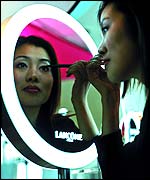
 Mr Gasparrini is not a lothario, but a make-up salesman.
Such observations on changing Chinese style are vital to his job, which includes maintaining Maybelline's lead as China's top-selling lipstick. He thinks young Chinese women are trying bolder styles, and lifestyles as their earning power grows. The aspirations of China's urban under 25s are "unlike anything seen before," says Angie Eagan, Shanghai manager for international marketing consultancy Burson-Marsteller. Struggling to keep up The ruling Communist Party, which is gathering in Beijing to pick a new generation of leaders, must keep up with these needs.
The nominees are in their fifties and sixties. That is young by Chinese political standards. But their success will depend upon satisfying an increasingly demanding generation of trendy shopaholics. Younger urban Chinese grew up in an economic boom, often pampered by as many as six adults. Rules limiting family size have created a generation of demanding only children.
The one-child generation's attitude to money is at odds with that of their parents, who grew up amid the austerity of the Cultural Revolution. And it contrasts to as near back as the mid-1980s, where sporting permed hair could get you in trouble. Zhang Lijia, a writer and journalist, recalls how her factory party boss blocked her studies because he thought her naturally curly hair was a perm. Today's youngsters are "very individualistic, very international...the power of material wealth has been very salient in their lives," says Huang Hung, the publisher of 17 Magazine, a lifestyle bible for teens to mid-twenties. "They're highly motivated and driven to make a better life for themselves" Another magazine, I Look, is aimed at women in their late twenties, whose typical income is 4,000 Yuan ($487) a month, which is a very good urban wage in China, while Le (meaning 'pleasure') has a 67% male readership. Cool brands for hot kids Ms Huang reckons students and teens routinely overspend their allowances, and borrow off friends. This boosts their spending power to 300-800 Yuan ($36-$97) a month, in a country where the average wage is 1,000 Yuan ($121) a month.
It goes on consumer electronics, music, digital MP3 music players. Must-have brands include Nike sportswear, Pepsi soft drinks, Maybelline make-up and Nokia mobile phones, she says. Shopping has become a leisure activity, partly because even new apartments are cramped. "It's not comfortable to stay at home, so Chinese, they go out...they go to the department store, they walk" says Mr Gasparrini. Responsible careerists But they are not simply spendthrifts. By their late twenties, many Chinese are the highest earners in their family. The majority of China's top earners are aged less than 40, according to Japanese investment bank Nomura.
"Their decisions about jobs are heavily influenced by their parents because there's very little fall back" for the older generation, says Ms Eagan. Hardly surprising, then, if they feel it's okay to spend the surplus. Even make-up adverts reveal this underlying seriousness, favouring "a good girl image", says Ms Huang. Teenagers and students "are very career minded already", preferring "a more clean image....a more corporate image rather than the rock star woman", she says. "The mass appeal of products is that it's happy, healthy and upwardly mobile." "We don't do any daring advertising, but there is always some small sexy details but not too much, not bad taste," says L'Oreal's Mr Gasparrini. Men look in the mirror However, sexual freedom is growing, along with financial independence, which has enabled singles to move out of their parents homes.
It has created a market for male cosmetics and a rush to launch men's skincare ranges. "Chinese men are starting to groom themselves," says a delighted Ms Huang. "Physical appearance is becoming more important in their daily life, they go to more interviews, they switch jobs, they date," she says. But it isn't just anxiety that is driving men to cosmetics counters: "They feel they have achieved a level of success that's satisfactory, they're paying more attention to the cultural and personal content of their lives," says Ms Huang. While politics is a little discussed topic among Chinese youth, they value their freedom to pursue entrepreneurial creativity highly. It's a far cry from the rough and ready peasant style of the late Deng Xiaoping, who opened up China to foreign goods and was famous for keeping a spittoon handy. At first glance, the rampant consumers of China's "Me" generation should cause the ruling Communist Party few worries if the economy keeps growing, which economists think likely. But the one-party state's new leaders will rule a generation that is increasingly used to being listened to - in well-paid jobs, often for foreign firms, even in product focus groups, or by parents they financially support. | |
See also:  24 Oct 02 | Asia-Pacific 02 Feb 02 | Media reports Internet links: The BBC is not responsible for the content of external internet sites Top Business stories now: Links to more Business stories are at the foot of the page. | ||||||||||||||||||||||||||||||||||||||||||||||||||||||||||||||||||||||||||||||||||||||||||||||||||||||||||||||||||||||||||||||||||||||||||||||||||||||||||||||||||||||||||
| |
|  E-mail this story to a friend E-mail this story to a friend |
| |
| Links to more Business stories |
| | | ||
 | ||||
 | | Back to top
| ||
| ---------------------------------------------------------------------------------- To BBC Sport>> | To BBC Weather>> | To BBC World Service>> ---------------------------------------------------------------------------------- © MMIII | News Sources | Privacy |