
|
 |
 | | | | | | |||||||||||||||||||||||||||||||||||||||||||||||||||||||||||||||||||||||||||||||||||||||||||||||||||||||||||||||||||||||||||||||||||||||||||||||||
| | | You are in: Business | |||||||||||||||||||||||||||||||||||||||||||||||||||||||||||||||||||||||||||||||||||||||||||||||||||||||||||||||||||||||||||||||||||||||||||||||||||
|
| | Sunday, 3 November, 2002, 10:21 GMT Little interest in China Telecom shares 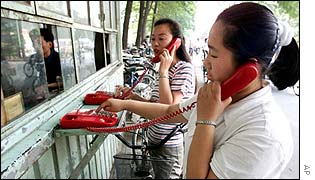 China Telecom needs cash to upgrade its network China Telecom's ambition to sell shares worth about $3.67bn (�2.35bn) may be slashed to less than $2bn, a report has said. China Telecom, for years the state-owned monopoly and still the biggest player in China, had been due to release the shares to the New York market on 6 November and in Hong Kong on 7 November. But the flotation was delayed due to weak demand from investors. "We could reduce the size substantially, and we are still working on a number of issues," one banker told Reuters. "The size of the deal could be cut in half." Major blow Selling just 10% of China Telecom would still bring in substantial investment. But given that the initial ambition had been the sale of 20% of the giant it would be a climbdown in terms of prestige. The initial target would have made the flotation the third largest in the world this year. The failure to reach the target has also raised concerns in China about the likely success of future privatisations. Controversial The flotation had already kicked up a storm in the "special administrative region" of Hong Kong, after plans were unveiled to boost the cost of calling the mainland by 750%, from 2 US cents a minute to 17 cents. The proposal, which critics said could cost businesses, more than $5,000 more a month, drew howls of anger from Hong Kong. Investors are cautious about investing given that at least 80% of the company will remain in the hands of the state, not least because of China's history of rapid changes in regulation of the phone business. It is only a few months since the snap decision was made to create two new companies to compete with CT and its main rival, Unicom. That "regulatory risk" may be too much for investors to stomach unless the offer is improved. But the price per share cannot come down much further than the HK$1.48 low end of its range without undercutting the book value set by the government at HK$1.46, a move currently banned by Beijing. | |
See also:  01 Nov 02 | Business 25 Sep 02 | Business 17 Sep 02 | Business 02 Aug 02 | Business 11 Dec 01 | Business 28 Sep 01 | Business 01 Oct 01 | Business 22 Jun 00 | Business 11 Dec 01 | Business 17 May 02 | Business 18 Mar 02 | Business Top Business stories now: Links to more Business stories are at the foot of the page. | |||||||||||||||||||||||||||||||||||||||||||||||||||||||||||||||||||||||||||||||||||||||||||||||||||||||||||||||||||||||||||||||||||||||||||||||||
| |
|  E-mail this story to a friend E-mail this story to a friend |
| |
| Links to more Business stories |
| | | ||
 | ||||
 | | Back to top
| ||
| ---------------------------------------------------------------------------------- To BBC Sport>> | To BBC Weather>> | To BBC World Service>> ---------------------------------------------------------------------------------- © MMIII | News Sources | Privacy |





