
|
 |
 | | | | | | ||||||||||||||||||||||||||||||||||||||||||||||||||||||||||||||||||||||||||||||||||||||||||||||||||||||||||||||||||||||||||||||||||||||||||
| | | You are in: Business | ||||||||||||||||||||||||||||||||||||||||||||||||||||||||||||||||||||||||||||||||||||||||||||||||||||||||||||||||||||||||||||||||||||||||||||
|
| | Wednesday, 30 October, 2002, 01:06 GMT IMF trims Euro growth forecast 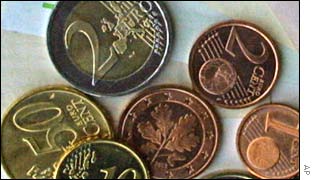 Inflation is still a problem, the ECB believes The International Monetary Fund has trimmed its forecast for eurozone growth, and suggested that the bloc's central bank should consider cutting rates to kick-start the economy. The IMF on Tuesday lowered the region's 2002 growth forecast to just 0.75% from 0.9% last month, and revised its growth prediction for 2003 down to 2% from 2.3% last time. It added that the recovery would remain "tepid", warning that the area still faces "considerable downside risks". "The economy is fairly weak and we don't see a very robust recovery in prospect," said Michael Deppler, the head of the IMF's European department. He added that in view of persistently sluggish growth in the region, a "clear bias towards further monetary easing would be appropriate". Reluctance The European Central Bank (ECB) last year cut rates to ward off the global economic downturn, but did so less aggressively than its US counterpart, the Federal Reserve. The ECB last cut borrowing costs in October 2001, leaving them at their current low of 3.25%. It has since resisted pressure for further cuts to stimulate the faltering economy, arguing that inflationary risks are still present in the form of rising wage trends and high oil prices. Slower growth has been particularly evident in Germany, once seen as Europe's economic powerhouse. Rules broken The IMF also praised the EU's growth and stability pact, a set of rules obliging European governments to impose strict limits on budget deficits. Earlier this year, The European Commission controversially agreed to push back the date by which governments must balance their budgets by three years to 2006 after it emerged that the eurozone's three biggest economies - France, Germany and Italy - were in danger of exceeding their deficit ceilings. More recently, European Commission President Romano Prodi called the pact "stupid," saying it imposed a fiscal straitjacket on governments during times of low growth. "The growth and stability pact is a sound framework, but it has a credibility problem," Mr Deppler said. "The core of the problem is the fact that the three largest countries have basically not lived up to the rules." | | See also:  08 Aug 02 | Business 12 Sep 02 | Business 01 Aug 02 | Business 12 Jul 02 | Business 04 Jul 02 | Business 02 Jul 02 | Business 30 Jun 02 | Business Top Business stories now: Links to more Business stories are at the foot of the page. | ||||||||||||||||||||||||||||||||||||||||||||||||||||||||||||||||||||||||||||||||||||||||||||||||||||||||||||||||||||||||||||||||||||||||||
| |
|  E-mail this story to a friend E-mail this story to a friend |
| |
| Links to more Business stories |
| | | ||
 | ||||
 | | Back to top
| ||
| ---------------------------------------------------------------------------------- To BBC Sport>> | To BBC Weather>> | To BBC World Service>> ---------------------------------------------------------------------------------- © MMIII | News Sources | Privacy |



