
|
 |
 | | | | | | ||||||||||||||||||||||||||||||||||||||||||||||||||||||||||||||||||||||||||||||||||||||||||||||||||||||||||||||||||||||||||||||||||||||||||
| | | You are in: Business | ||||||||||||||||||||||||||||||||||||||||||||||||||||||||||||||||||||||||||||||||||||||||||||||||||||||||||||||||||||||||||||||||||||||||||||
|
| | Friday, 25 October, 2002, 06:35 GMT 07:35 UK Pacific hits back at EU farm deal 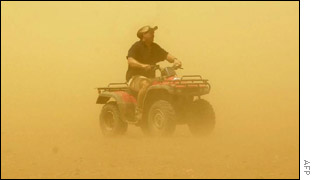 Duststorms and drought have hurt Australia's farmers Countries around the Pacific rim are up in arms over agriculture subsidies, and their opposition could spell trouble for a European deal on aid for the continent's own farmers that is just days old. In order to settle a row which threatened the European Union's expansion plans, its 15 member states agreed on a slow phasing out from 2007 through 2013. That matches last year's watered-down plans for World Trade Organisation talks, which promised "reductions with a view towards phasing out" the payoffs - weakened largely on EU insistence. But that is not good enough for the 21 economies at this week's Asia Pacific Economic Cooperation (Apec) forum meeting in Mexico, who have called for the "abolition of all forms of export subsidies". Given that the deadline for completing the current round of WTO talks is 1 January 2005, there is choppy water ahead. Subsidies? What subsidies? The picture is not quite as clear-cut as it might seem. While the EU is the world leader in farming export subsidies, paying out billions each year, a number of Apec countries have other ways of making life easier for the agriculture business. In the US, for example, export subsidies only come to about $15m a year. But there are still billion-dollar support payments for specific crops and regions, which the Bush administration promised earlier this year to hike by as much as $60bn over the next ten years. And in South Korea and Japan, rice farmers, a politically powerful lobby, are heavily subsidised, while imports are limited to keep domestic prices high. Time up Even so, the Apec economies are keen to find new export markets - and can talk a good game since opening up agriculture is a hot-button issue for developing countries in general. The Apec joint statement pushes for the EU to give ground before March 2003, the deadline to come up with a basic framework for the WTO farm talks. In US Trade Representative Robert Zoellick's words, the statement is a call "from the 21 economies to the major agricultural export subsidizer, the EU, to say it's time to step forward" and cut a deal. | | See also:  24 Oct 02 | Europe 27 Sep 02 | Business 03 Sep 02 | Business 26 Jul 02 | Business 19 Jul 02 | Business 05 Jul 02 | Business 15 May 02 | Business Top Business stories now: Links to more Business stories are at the foot of the page. | ||||||||||||||||||||||||||||||||||||||||||||||||||||||||||||||||||||||||||||||||||||||||||||||||||||||||||||||||||||||||||||||||||||||||||
| |
|  E-mail this story to a friend E-mail this story to a friend |
| |
| Links to more Business stories |
| | | ||
 | ||||
 | | Back to top
| ||
| ---------------------------------------------------------------------------------- To BBC Sport>> | To BBC Weather>> | To BBC World Service>> ---------------------------------------------------------------------------------- © MMIII | News Sources | Privacy |



