
|
 |
 | | | | | | |||||||||||||||||||||||||||||||||||||||||||||||||||||||||||||||||||||||||||||||||||||||||||||||||||||||||||||||||||||||||||||||||||||||||||||||||||
| | | You are in: Business | |||||||||||||||||||||||||||||||||||||||||||||||||||||||||||||||||||||||||||||||||||||||||||||||||||||||||||||||||||||||||||||||||||||||||||||||||||||
|
| | Tuesday, 22 October, 2002, 12:45 GMT 13:45 UK Philippines ducks fight with corruption 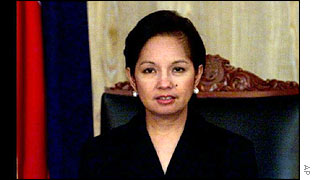 A new major road has been named after the president's father
Corruption hobbles the economies of many East Asia countries, both rich and poor, and it takes many forms. In the Philippines, corruption can be found at every level of society. This year business funded lobby group Transparency International placed the Philippines 77th out of 102 nations, in terms of the level of corruption in its public sector. The latest corruption rumour to hit the country's news stands involves a huge bill for the building of a main road in Manila. Going nowhere Near where I live, there's a brand-new, eight-lane road that is peculiar in Manila, because there's hardly any traffic on it. There is no traffic, because the road goes nowhere. It is called President Diosdado Macapagal Boulevard, after a 1960s president. It just so happens that the incumbent president, Gloria Macapagal Arroyo is his daughter. Accusations Any new road is normally applauded in business and political circles, given that the usual complaint is about the dismal under-investment in infrastructure. But not this road. Politicians of all stripes are expressing rage over an accusation that one contractor built a 2km section of the 5km road for the equivalent of $16m - some $11.5m more than it should have cost. The suspicion is that somebody ripped off the government and pocketed the proceeds. Fashionable scandal The Presidential Anti-Graft Commission and committees of both houses of Congress are tripping over each other in their efforts to investigate the President Diosdado Macapagal Arroyo Boulevard affair. It is the fashionable scandal at the moment, but in a few weeks' time, the politicians and the newspapers will have forgotten about it. It will be superseded by another allegation of corruption about something completely different and nobody is likely to be prosecuted, let alone convicted. And then, a little later, when some international corruption watchdog comes out with a league table of the least corrupt countries in east Asia, or in the world, there will be endless hand-wringing here about the fact that the Philippines is bouncing around in the bottom half of the table. Small-scale corruption Not far from the President Diosdado Macapagal Arroyo Boulevard is a more ordinary Manila street, jammed with traffic, which is overlooked by an apartment that I used to rent. It is a one way street, although there are no road signs to inform drivers that it is one way. During the rush hour, I would watch from my window a gang of what they call here "traffic enforcers"- in other words, uniformed employees of the local government who have police-type powers to regulate traffic, including the power to exact on-the-spot fines for minor offences. I would watch every evening as one of these "enforcers" stood at the nearby intersection, and enthusiastically directed vehicles up the one-way street, the wrong way. Whereupon, half a dozen of his colleagues would leap out into the roadway, stop the offending vehicle, and collect the bribe of maybe $2, maybe $10, that the driver had to pay in order for the offence to be overlooked. When Filipinos, or foreigners who try to do business here, moan about corruption, it is not the kind of corruption involving people with millions of dollars to build the roads that irritates them. It is the small-scale corruption that affects the ordinary people who use the roads - corruption that touches, literally, the man on the street. | | See also:  29 Aug 02 | Business 29 Aug 02 | Business 13 Aug 02 | Asia-Pacific 15 Oct 01 | Business Internet links: The BBC is not responsible for the content of external internet sites Top Business stories now: Links to more Business stories are at the foot of the page. | |||||||||||||||||||||||||||||||||||||||||||||||||||||||||||||||||||||||||||||||||||||||||||||||||||||||||||||||||||||||||||||||||||||||||||||||||||
| |
|  E-mail this story to a friend E-mail this story to a friend |
| |
| Links to more Business stories |
| | | ||
 | ||||
 | | Back to top
| ||
| ---------------------------------------------------------------------------------- To BBC Sport>> | To BBC Weather>> | To BBC World Service>> ---------------------------------------------------------------------------------- © MMIII | News Sources | Privacy |





