
|
 |
 | | | | | | ||||||||||||||||||||||||||||||||||||||||||||||||||||||||||||||||||||||||||||||||||||||||||||||||||||||||||||||||||||||||||||||||||||||||||||||||||||||||||||||||||||||||||||||||||||||||||
| | | You are in: Business | ||||||||||||||||||||||||||||||||||||||||||||||||||||||||||||||||||||||||||||||||||||||||||||||||||||||||||||||||||||||||||||||||||||||||||||||||||||||||||||||||||||||||||||||||||||||||||||
|
| | Tuesday, 1 October, 2002, 08:21 GMT 09:21 UK 'No sign' of house price slowdown 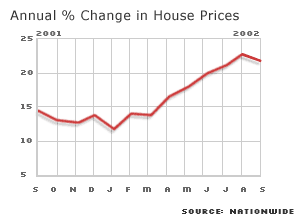 The UK's biggest building society, Nationwide, has revised upward its forecast for house price growth this year, after finding that the market continued to boom last month. Nationwide has uprated by five percentage points, to 23%, its estimate of price growth this year.
"There remains no compelling evidence of the market slowing significantly," said Alex Bannister, Nationwide group economist. The market was continuing to be underpinned by the low cost of mortgages, with interest rates at their lowest since the 1960s, and absence of unemployment fears. "With [interest] rates set to remain at 4% for the rest of this year and employment growth still strong, we are revising our forecast for house price growth," Mr Bannister said. Slowdown scenario Nationwide warned the market's pace was "unsustainable over the medium term", with expensive London boroughs already showing signs of easing prices. "Our view is that London will slow first and then this will gradually spread to the rest of the country," the building society said. But the market was "not teetering on the edge of a sharp slowdown", Tuesday's report added. With lenders exercising stronger financial checks than in the run up to the early 1990s market crash, there was little risk a new negative equity spiral, Mr Bannister said. "It was this younger and less financially secure group that suffered most in the [early 1990s] downturn," he said. "One in three first-time buyers put down no deposit and were exposed to the risk of negative equity from even the slightest fall in prices. "The current experience is different. There are far fewer first-time buyers, far fewer put down no deposit and they are generally older and not as over-stretched." Market threats A rise in unemployment rates represented the greatest threat to the market, as companies hit by falling profits shed staff, Tuesday's report said. "This would knock confidence and obviously lead to some increase in arrears cases." An easing in the jobs market would also feed through into slower wage rises. "This, combined with increased social security payments and potential further tax rises, could lead to a more significant weakening in price growth," Nationwide said. The average price of a house in the UK is now �112,919, Nationwide said. | |
See also:  25 Sep 02 | Business 25 Sep 02 | Business 19 Sep 02 | Business 09 Sep 02 | Business 03 Sep 02 | Business 30 Aug 02 | Business 14 Aug 02 | Business Top Business stories now: Links to more Business stories are at the foot of the page. | ||||||||||||||||||||||||||||||||||||||||||||||||||||||||||||||||||||||||||||||||||||||||||||||||||||||||||||||||||||||||||||||||||||||||||||||||||||||||||||||||||||||||||||||||||||||||||
| |
|  E-mail this story to a friend E-mail this story to a friend |
| |
| Links to more Business stories |
| | | ||
 | ||||
 | | Back to top
| ||
| ---------------------------------------------------------------------------------- To BBC Sport>> | To BBC Weather>> | To BBC World Service>> ---------------------------------------------------------------------------------- © MMIII | News Sources | Privacy |






