|
 |
 | | | | | | ||||||||||||||||||||||||||||||||||||||||||||||||||||||||||||||||||||||||||||||||||||||||||||||||||||||||||||||||||||||||||||||||||||||||||||||||||||||||||
| | | You are in: Business | ||||||||||||||||||||||||||||||||||||||||||||||||||||||||||||||||||||||||||||||||||||||||||||||||||||||||||||||||||||||||||||||||||||||||||||||||||||||||||||
|
| | Wednesday, 25 September, 2002, 12:30 GMT 13:30 UK Blackout protest in Argentina 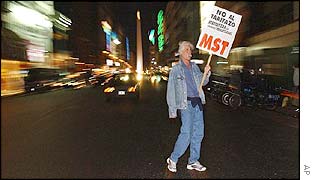 Intentional blackouts are a new tool for protest The lights have gone out in Buenos Aires and across Argentina as the country's citizens, already enraged by economic privation, protested against huge rises in utility bills. For half an hour from 8pm local time (2300 GMT), citizens turned off both home and outside lights, while hundreds of drumming protesters gathered in the streets.
The rate hikes - 275% for international phone calls, 50% on heating gas and 35% for electricity - have been proposed by utilities to compensate them for losses triggered by the peso's devaluation against the dollar earlier this year. The peso has fallen almost three quarters in value since then, and the largely foreign-owned utility companies - which have been suffering from a rate freeze since January - are up in arms. Collectively, the utilities invested about $5bn, largely borrowed in hard currency, over the past decade to improve services, and the calamitous slide in their income has forced many into default. No win situation The deadlock is just one more symptom of the chaos which exemplifies the Argentine economy almost a year on from defaulting on its international debts in December 2001. The government would like to compromise with the utilities, not least because it might help the country's cause with its foreign creditors. But the rises, should they come into effect, would probably drive inflation through the roof. After almost a decade of flat prices thanks to a dollar-peso peg, prices soared 37.8% in the first eight months of this year. With half the population below the poverty line and one-third out of work, the utility hikes may well simply be unsustainable. And a court has ruled that the government's wish for public hearings - an attempt to take the edge off the public's disdain for yet more cost-of-living hikes - is illegal. Back to the state The ruling is based on the government's own emergency legislation outlawing rate increases, passed early on in the crisis. City councillors welcomed the decision. "Not only do they want us to pay higher rates, but the services have never improved since they were privatised," said one, Vilma Ripoll. "They should all leave and we should nationalise everything." | |
See also:  16 Aug 02 | Business 14 Aug 02 | Business 15 Aug 02 | Business Internet links: The BBC is not responsible for the content of external internet sites Top Business stories now: Links to more Business stories are at the foot of the page. | ||||||||||||||||||||||||||||||||||||||||||||||||||||||||||||||||||||||||||||||||||||||||||||||||||||||||||||||||||||||||||||||||||||||||||||||||||||||||||
| |
|  E-mail this story to a friend E-mail this story to a friend |
| |
| Links to more Business stories |
| | | ||
 | ||||
 | | Back to top
| ||
| ---------------------------------------------------------------------------------- To BBC Sport>> | To BBC Weather>> | To BBC World Service>> ---------------------------------------------------------------------------------- © MMIII | News Sources | Privacy |