
|
 |
 | | | | | | |||||||||||||||||||||||||||||||||||||||||||||||||||||||||||||||||||||||||||||||||||||||||||||||||||||||||||||||||||||||||||||||||||||||||||||||||||||||||||||||||||||||||||||||||||||||||||||||||||||||||||||||||||||||
| | | You are in: Business | |||||||||||||||||||||||||||||||||||||||||||||||||||||||||||||||||||||||||||||||||||||||||||||||||||||||||||||||||||||||||||||||||||||||||||||||||||||||||||||||||||||||||||||||||||||||||||||||||||||||||||||||||||||||||
|
| | Tuesday, 3 September, 2002, 18:13 GMT 19:13 UK 'Euroflation' sparks Greek boycott 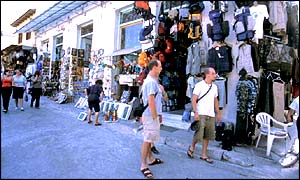 The tourist industry is seen as the worst price offender Greece's main consumer group has claimed massive support for a boycott of shops on Tuesday, as part of continuing protests over price rises caused by the introduction of the euro. "On Tuesday we are not buying anything. No food, no clothes, no fuel. Absolutely nothing," the Institute of Consumer Protection (Inka) said in a statement. According to Inka, retail trade dropped by up to 85% compared with Monday, and opinion polls predicted nationwide participation of up to 75% of consumers. But the figures were disputed by Greek businesses. "There was not a fall that could be considered serious," a spokesman for the Greek Retail Business Association said. The boycott, which extended even to switching off electrical goods and abstaining from telephone calls, had the indirect backing of the socialist government, which has previously accused unscrupulous retailers of fiddling. Greece is the latest in a string of eurozone countries - including Italy, the Netherlands and most prominently Germany - to have experienced consumer unrest over the transition to euro cash. Dodgy dealing Campaigners claim that the switchover to the euro allowed merchants to raise prices by stealth. In Greece, for example, goods that previously cost 300 drachma could be repriced at 1 euro - which equates to 340.75 drachma - without most customers noticing the difference. Indeed, Inka claims that the average price rise has been 10% so far this year. European authorities, meanwhile, have stuck to their line that the changeover caused only negligible changes in overall prices, since roundings-up could be balanced by roundings-down. Ministry measures The Greek government, too, has acknowledged the problem. "I believe a message must be sent throughout the market that inflated prices and deceiving consumers because of the new currency will not be tolerated," Finance Minister Nikos Christodoulakis said. Mr Christodoulakis is working on a blacklist of businesses involved in unethical pricing, and last month called in major tourist operators to warn them against raising their prices. Aside from the political implications, the ministry is concerned about Greece's headline rate of inflation, at 3.3% already among the highest in the eurozone. The country's participation in the euro - which it joined late, in 2001 - could be imperilled by any economic indiscipline. | |
See also:  03 Sep 02 | Business 12 Aug 02 | Business 05 Jul 02 | Business 05 Jun 02 | Business 31 May 02 | Business 31 May 02 | Business Internet links: The BBC is not responsible for the content of external internet sites Top Business stories now: Links to more Business stories are at the foot of the page. | |||||||||||||||||||||||||||||||||||||||||||||||||||||||||||||||||||||||||||||||||||||||||||||||||||||||||||||||||||||||||||||||||||||||||||||||||||||||||||||||||||||||||||||||||||||||||||||||||||||||||||||||||||||||
| |
|  E-mail this story to a friend E-mail this story to a friend |
| |
| Links to more Business stories |
| | | ||
 | ||||
 | | Back to top
| ||
| ---------------------------------------------------------------------------------- To BBC Sport>> | To BBC Weather>> | To BBC World Service>> ---------------------------------------------------------------------------------- © MMIII | News Sources | Privacy |






