
|
 |
 | | | | | | ||||||||||||||||||||||||||||||||||||||||||||||||||||||||||||||||||||||||||||||||||||||||||||||||||||||||||||||||||||||||||||||||||||||||||
| | | You are in: Business | ||||||||||||||||||||||||||||||||||||||||||||||||||||||||||||||||||||||||||||||||||||||||||||||||||||||||||||||||||||||||||||||||||||||||||||
|
| | Monday, 2 September, 2002, 11:06 GMT 12:06 UK Concern mounts over German budget 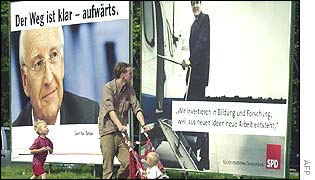 Election pressure has loosened German purse strings The German government has insisted that it will stick to European Union-imposed budget targets, despite a sluggish economy and the cost of mopping up after the summer's devastating flooding. According to newspaper FT Deutschland, the government will soon peg the budget deficit for this year to 2.6-2.9% of annual economic output, well below the 3% ceiling imposed by Brussels. But speculation is mounting that these targets will be breached, as the government boosts spending in the run-up to this month's general election. News magazine Der Spiegel, citing unnamed experts in the finance ministry, said that the deficit would reach 3.5% by the end of the year. This would earn Berlin a severe reprimand, and possibly more punitive action, from the European Commission, which has long been troubled that German state spending could destabilise the euro. Pact problems Concern that budget targets could be missed - not just in Germany, but in Italy, France and other countries - has raised calls for a rethink of EU-wide rules on deficits. The so-called Stability Pact, which governs state spending as a means of ensuring region-wide economic discipline, is unpopular with many governments. But the German finance ministry has yet again denied that it is pushing for changes to the Stability Pact, contradicting persistent rumours. The Commission said last week that the pact must be kept as it is, and said no negotiations on changes were under way. Floods of funding Fingers have pointed to Germany partly because of internal political pressures. The government is under considerable pressure to respond to the summer floods, which have caused damage and loss likely to amount to billions of euros. Already, Berlin has pledged 130m euros (�82m; $128m) in aid to stricken regions, and the overall figure - including tax relief for those affected - could well be many times higher. At the same time, the German economy, which had seemed to be emerging briskly from last year's brief recession, has slowed to a crawl, and is seen as in danger of starting to shrink once again. Test for the Commission Yet to be tested is precisely what action Brussels will take in the event of a deficit above 3%. At the beginning of this year, the Commission pulled back from an out-and-and reprimand for Germany and Portugal, both of which were then straying close to the 3% mark. In theory, a breach of the ceiling triggers the automatic imposition of heavy fines, but analysts are sceptical about the likelihood of punitive action against the EU's biggest member state. The likelihood could be further diminished by the possibility that at least four European countries, together accounting for some two-thirds of eurozone output, could be in default of the Stability Pact at the same time. | | See also:  09 Jul 02 | Business 12 Feb 02 | Business 30 Jan 02 | Business 30 Jan 02 | Business 21 Jan 02 | Business 04 Dec 01 | Business 03 Dec 01 | Business Internet links: The BBC is not responsible for the content of external internet sites Top Business stories now: Links to more Business stories are at the foot of the page. | ||||||||||||||||||||||||||||||||||||||||||||||||||||||||||||||||||||||||||||||||||||||||||||||||||||||||||||||||||||||||||||||||||||||||||
| |
|  E-mail this story to a friend E-mail this story to a friend |
| |
| Links to more Business stories |
| | | ||
 | ||||
 | | Back to top
| ||
| ---------------------------------------------------------------------------------- To BBC Sport>> | To BBC Weather>> | To BBC World Service>> ---------------------------------------------------------------------------------- © MMIII | News Sources | Privacy |



