|
 |
 | | | | | | ||||||||||||||||||||||||||||||||||||||||||||||||||||||||||||||||||||||||||||||||||||||||||||||||||||||||||||||||||||||||||||||||||||||||||||||||||||
| | | You are in: Business | ||||||||||||||||||||||||||||||||||||||||||||||||||||||||||||||||||||||||||||||||||||||||||||||||||||||||||||||||||||||||||||||||||||||||||||||||||||||
|
| | Monday, 2 September, 2002, 00:39 GMT 01:39 UK Multinationals 'not truly global' 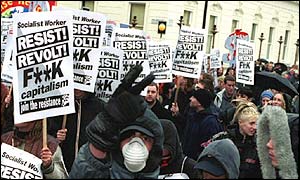 Protesters say globalisation only helps the rich
Very few of the top 500 multinational companies have a genuinely global presence, according to new research. A report by Professor Alan Rugman of Oxford and Indiana Universities says there is now a trend towards what he calls de-globalisation in the face of persistently poor global performance. Professor Rugman's research, funded by the UK's Economic and Social Research Council, is a challenge to the widely held view of an increasingly globalised world economy. He says the vast majority of the leading five hundred multinational companies are not pursuing a global strategy.
Instead, they are focusing on sales within their own home regions, which for nearly all of them means North America, the European Union or Japan. Some companies, notably those developing and making medicines, have very profitable foreign operations. But in the last three years, the gap between best and worst performing - in terms of profitability - has widened dramatically. Professor Rugman says there are a handful of exceptions that qualify as genuinely global corporations - including Nestle and Unilever in Europe, IBM of the United States and Sony of Japan. Domestic production He says the lack of evidence for an inevitable process of globalisation is particularly stark in retailing. Walmart, the world's biggest company in terms of total sales this year, does 94% of its business in North America. Although the research focuses on sales, Professor Rugman says that a similar picture emerges in relation to production operations. Well known examples of overseas production - such as the sports shoe maker Nike - are very much the exception to a pattern of production much closer to home. | | See also:  01 May 02 | UK 07 Jun 02 | Business 22 Jan 02 | Business 30 Jan 02 | Business 15 Mar 02 | Scotland Internet links: The BBC is not responsible for the content of external internet sites Top Business stories now: Links to more Business stories are at the foot of the page. | ||||||||||||||||||||||||||||||||||||||||||||||||||||||||||||||||||||||||||||||||||||||||||||||||||||||||||||||||||||||||||||||||||||||||||||||||||||
| |
|  E-mail this story to a friend E-mail this story to a friend |
| |
| Links to more Business stories |
| | | ||
 | ||||
 | | Back to top
| ||
| ---------------------------------------------------------------------------------- To BBC Sport>> | To BBC Weather>> | To BBC World Service>> ---------------------------------------------------------------------------------- © MMIII | News Sources | Privacy |