|
 |
 | | | | | | ||||||||||||||||||||||||||||||||||||||||||||||||||||||||||||||||||||||||||||||||||||||||||||||||||||||||||||||||||||||||||||||||||||||||||||||||||||||||||||||||||||||||||||||||||||||||||||||
| | | You are in: Business | ||||||||||||||||||||||||||||||||||||||||||||||||||||||||||||||||||||||||||||||||||||||||||||||||||||||||||||||||||||||||||||||||||||||||||||||||||||||||||||||||||||||||||||||||||||||||||||||||
|
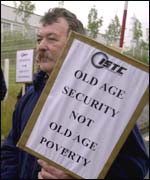
| | Thursday, 5 September, 2002, 15:34 GMT 16:34 UK RMT threatens pensions strike  Workers at the Caparo steel plant at Tredegar
The powerful rail workers union, the RMT, has told BBC News Online that its workers could strike over the closure of final salary pension schemes.
It is the latest union to voice increasing dissatisfaction with the current scale of closures of the generous pension schemes - and threaten industrial action. The RMT's concerns for the Railways Pension scheme could take the pensions issue onto a different level as while it is a relatively small union, it is immensely powerful.
The pensions issue will be hotly debated at next week's Trades Union Congress (TUC) meeting in Blackpool. Caparo Group, a steel company, owned by Labour peer Lord Paul is already facing strike action from workers. RMT concerns The RMT - which represents 60,000 transport workers - is currently negotiating with a number of companies, including Wightlink, an Isle of Wight car ferry operator, Southern Vectis, an Isle of Wight bus company, and Wilts & Dorset another bus company to try and prevent closures of the schemes.
Like many other industries, the rail industry could be facing a pensions crunch. Under rules created when the rail industry was privatised in September 1993, railway workers' pensions were afforded a degree of protection. A cash reserve enabled workers at rail companies to pay reduced contributions. This reserve is now set to run out in September next year. The operating companies have just received new valuations of the pension funds and will be able to assess whether there is a shortfall or not. There is a fear that rail companies may try to close their final salary pension schemes to new workers. "If we find an employer has set up a money purchase scheme, we would be saying to them we do not want you to do it. If they continued, we would be in dispute," says Bob Crow, secretary general of the RMT. Unilateral decisions In an attempt at pre-empting disputes, the RMT is writing to employers and inviting them to engage in negotiations with the union. "Every single employer will need to examine their section of pension fund. "Action will need to be taken for those that are in deficit. But we don't want an employer's unilateral decision on how much contributions will go up by. We want them to discuss it with us first," says Mr Crow. RMT is not alone in voicing threats. Amicus, which has 1.2m members, says some workers at a number of manufacturing companies have already balloted for strike action. "Sometime in the next month or so we should know," says Brian Harris, a spokesman. GMB is another union locked in negotiations with the aim of trying to prevent scheme closures. It says it is talking to about a dozen companies, who are planning to scrap their final salary schemes, including British Airways. "We won't rule out striking over pensions, but we are not at that point in any of our discussions," says Emily Thomas.
"It will absolutely become a strike issue if the trend continues. These companies are seeing this as a cost-cutting measure," she added. In the early 1990s, many employers - encouraged by strong market performance - took an �18bn payment holiday. Unions say this is - in part - the reason there are problems now. 'Betrayal of the low paid' At next week's TUC conference the pensions issue has a prime-time billing. According to Tom Powdrill, pensions investment officer at the TUC, members feel it is the most important issue of the moment.
"Pensions are effectively deferred pay," says Mr Powdrill. "Therefore when employers close final salary schemes or reduce the amount they contribute, employees are taking a pay cut." In the autumn, the government will publish a green paper outlining its action plan to tackle the mounting pensions crisis. But it may not placate the unions and workers. Bob Crow of the RMT said the closures are a betrayal of the low paid. "The government's pensions record is abysmal and they are creating a whole generation of people who will be retiring on inadequate benefits - a dependency culture for the future." Bob Crow, leader of the Rail Maritime and Transport Union (RMT) is taking part in a live forum on Friday 6th September at 1430 BST (1330 GMT). If you would like to participate, please send us your questions using the form below. Disclaimer: The BBC will put up as many of your comments as possible but we cannot guarantee that all e-mails will be published. The BBC reserves the right to edit comments that are published. | |
See also:  14 Aug 02 | Business 17 Jul 02 | Breakfast 10 Jul 02 | Wales 07 Jul 02 | Business 03 Jul 02 | Wales 02 Jul 02 | Wales 23 Jul 02 | Politics 16 Jul 02 | Business 03 Jul 02 | Business 05 Sep 02 | Business 04 Sep 02 | Business Internet links: The BBC is not responsible for the content of external internet sites Top Business stories now: Links to more Business stories are at the foot of the page. | ||||||||||||||||||||||||||||||||||||||||||||||||||||||||||||||||||||||||||||||||||||||||||||||||||||||||||||||||||||||||||||||||||||||||||||||||||||||||||||||||||||||||||||||||||||||||||||||
| |
|  E-mail this story to a friend E-mail this story to a friend |
| |
| Links to more Business stories |
| | | ||
 | ||||
 | | Back to top
| ||
| ---------------------------------------------------------------------------------- To BBC Sport>> | To BBC Weather>> | To BBC World Service>> ---------------------------------------------------------------------------------- © MMIII | News Sources | Privacy |










 FORUM
FORUM Rail union boss