|
 |
 | | | | | | ||||||||||||||||||||||||||||||||||||||||||||||||||||||||||||||||||||||||||||||||||||||||||||||||||||||||||||||||||||||||||||||||||||||||||||||||||||||||||||||||||||||||
| | | You are in: Business | ||||||||||||||||||||||||||||||||||||||||||||||||||||||||||||||||||||||||||||||||||||||||||||||||||||||||||||||||||||||||||||||||||||||||||||||||||||||||||||||||||||||||||
|
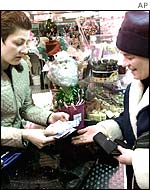
| | Monday, 12 August, 2002, 16:40 GMT 17:40 UK Dutch call for action on 'euroflation'  Consumers fear price hikes of up to 10% A political row has broken out in the Netherlands, after the central bank admitted that the launch of euro cash had sparked twice as much inflation as previously admitted. Over the weekend, Nout Wellink, president of the Nederlandsche Bank, said in an interview that the currency changeover had caused a 0.7 percentage point acceleration in inflation at the beginning of the year. The admission followed widespread consumer speculation - shared all over the eurozone - that shopkeepers had hiked prices this year amid widespread confusion over how the euro should work in practice. Now, opposition politicians have called on the centre-right government to impose price caps, and insisted that those on fixed incomes should be given state compensation. "The government assumed that the workings of the market would prevent price rises," the opposition Socialist Party said. "We have all fallen victim to that belief." Spike, or surge? European authorities have officially argued that the euro cash launch caused only the midlest of price spikes.
Statistical agency Eurostat said last month that the switch to notes and coins had raised consumer prices by at most 0.2 percentage points in the first half of this year. But the effect varied from country to country, depending on the precise amount of rounding up or down implemented by retailers during the changeover. In the Netherlands, the exchange rate was roughly 2.2 guilders to one euro, but retailers typically halved their prices for the sake of convenience, consumer groups have argued. This meant that a product that cost 10 guilders would cost 5 euros - 11 guilders, or 10% more - after the changeover. Opportunity Dutch opposition parties sense that the issue is a fertile one, especially since the once-buoyant Dutch economy is slowing sharply, and government finances have fallen into deficit. But the parties have different approaches to the issue. While the Socialists have called for full compensation, and tight restrictions on retailers, the larger PvdA Labour party wants to see a voluntary scheme, with retailers agreeing to restrain their prices in return for a window sticker. The more drastic idea of capping prices, also supported by the Green Party, may not have a chance because it would require a change in the law, the PvdA argued. Price creep Inflation has certainly crept up around Europe in the past few months. In the Netherlands, prices rose by an annual 3.5% in July, well above the eurozone average. As economic growth stutters around the region, rising prices have sparked political jitters, especially in countries where euroscepticism runs high. In Germany, where political opposition to the single currency has never fully abated, there have been repeated complaints about euro-related price hikes. Italy, traditionally one of the most pro-European countries in the region, has recently been hit by euro-inflation fever, with consumer groups calling for a boycott of retailers. | |
See also:  05 Jul 02 | Business 05 Jun 02 | Business 31 May 02 | Business 31 May 02 | Business Internet links: The BBC is not responsible for the content of external internet sites Top Business stories now: Links to more Business stories are at the foot of the page. | ||||||||||||||||||||||||||||||||||||||||||||||||||||||||||||||||||||||||||||||||||||||||||||||||||||||||||||||||||||||||||||||||||||||||||||||||||||||||||||||||||||||||
| |
|  E-mail this story to a friend E-mail this story to a friend |
| |
| Links to more Business stories |
| | | ||
 | ||||
 | | Back to top
| ||
| ---------------------------------------------------------------------------------- To BBC Sport>> | To BBC Weather>> | To BBC World Service>> ---------------------------------------------------------------------------------- © MMIII | News Sources | Privacy |