|
 |
 | | | | | | ||||||||||||||||||||||||||||||||||||||||||||||||||||||||||||||||||||||||||||||||||||||||||||||||||||||||||||||||||||||||||||||||||||||||||||||||||||||||||||||
| | | You are in: Business | ||||||||||||||||||||||||||||||||||||||||||||||||||||||||||||||||||||||||||||||||||||||||||||||||||||||||||||||||||||||||||||||||||||||||||||||||||||||||||||||||
|
| | Friday, 9 August, 2002, 10:30 GMT 11:30 UK Hong Kong dwells on US scandals 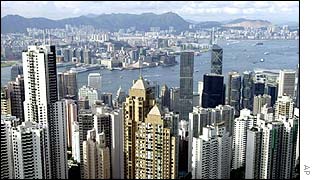 Executives in Asia change firms less often than the US
After the outbreak of Asian financial crisis in 1997, they faced stern lectures from America on how they should run their affairs. This flow of advice seems to have come to a halt. A friend of mine in Hong Kong who belongs to an international accountancy organisation is looking forward to this year's annual trade gathering. "Usually we go along there and sit quietly while the Americans tell us about the superiority of their way of doing things," he says. "But I guess we won't be hearing too much on that score this year." 'Crook Street' He is almost certainly right. Companies in the countries affected by the Asian financial crisis are not only seeing their shares performing better than stocks on Wall Street. They are also notably free of the kind of scandals that are dominating the news from Wall Street - or Crook Street as the headline in one US newspaper described it. But before anyone starts claiming moral high ground, it is worth appreciating why some of the things happening on Wall Street are unlikely to happen here. Many of the problems facing US companies stem from the granting of lavish share options to executives. This is not much of a feature in East Asia where most of the people who run companies already own most of the shares - in fact the families who control listed companies typically hold around three quarters of the equity. They get their income from dividends, not from the issue of new shares or from a fancy incentive scheme linked to the share price. Therefore they have no need to inflate earnings figures and push up share prices because the main group of people they would be cheating would be themselves. Making it work Nor is it likely that the people who own these Asian companies would be so quick to jump from one company to another, a trend rapidly accelerating among executives working in American companies. This means that they have no choice but to stick with what they have got and make it work. On the other hand, Asian companies are highly likely to have a loyal band of investment analysts talking up their stock, just like the analysts on Wall Street. However, I get the feeling that this kind of activity is so flagrant in Asia as to be pretty much shrugged off by investors, who are well aware of the strong ties between investment banks and the big companies dominating local stock exchanges. 'Dubious transactions' So, all in all Asia is most likely to escape the kind of scandals which are making Wall Street so interesting at the moment. However that is not to say that these companies are free of their own, rather familiar types of malpractice, which need no lead from Wall Street. As night follows day, there will be a fresh crop of dubious connected transactions between the private companies owned by majority shareholders and their listed entities. Indeed, there will be a whole host of other majority shareholder manipulations that are prejudicial to the interests of minority shareholders. But no one is getting excited about these things because they are not exactly new. | |
See also:  09 Aug 02 | Business 31 Jul 02 | Business 29 Jul 02 | Business 11 Jul 02 | Business Top Business stories now: Links to more Business stories are at the foot of the page. | ||||||||||||||||||||||||||||||||||||||||||||||||||||||||||||||||||||||||||||||||||||||||||||||||||||||||||||||||||||||||||||||||||||||||||||||||||||||||||||||
| |
|  E-mail this story to a friend E-mail this story to a friend |
| |
| Links to more Business stories |
| | | ||
 | ||||
 | | Back to top
| ||
| ---------------------------------------------------------------------------------- To BBC Sport>> | To BBC Weather>> | To BBC World Service>> ---------------------------------------------------------------------------------- © MMIII | News Sources | Privacy |