
|
 |
 | | | | | | ||||||||||||||||||||||||||||||||||||||||||||||||||||||||||||||||||||||||||||||||||||||||||||||||||||||||||||||||||||||||||||||||||||||||||
| | | You are in: Business | ||||||||||||||||||||||||||||||||||||||||||||||||||||||||||||||||||||||||||||||||||||||||||||||||||||||||||||||||||||||||||||||||||||||||||||
|
| | Friday, 26 July, 2002, 13:01 GMT 14:01 UK Zimbabwe luxury taxes soar 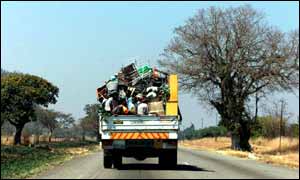 Farmer workers leave their farm in Zimbabwe Zimbabwe's government has increased import taxes on luxury goods by 500% as it tries to stem the collapse of the country's tattered economy. The state-controlled Herald newspaper on Friday reported that Finance Minister Simba Makoni announced the increase as part of a supplementary budget, aimed at raising Z$53bn (�610m). The extra funds will be used to finance farming, food relief and wage increases. Items included on the list of luxury goods are motor vehicles, bicycles, drinks and tobacco. Farm troubles According to the Herald, Mr Makoni said the government had been forced to change its budget plans because ongoing drought in the country caused severe food shortages. He was also quoted as saying new black farmers settling on land seized from white commercial farmers needed support. The Zimbabwe economy is in its fourth year of recession. Aid agencies have said nearly half the population needs emergency food because of the drought and disruption to farming. The farm changes are part of Zimbabwe President Mugabe's controversial land redistribution programme. Commercial farmers - most of them white - have had their farms reclaimed and handed to new settlers, usually with strong connections to the ruling Zanu-PF party. The result has been the destitution of thousands of black former workers on the farms, along with their families. Out of pocket Even those farms still operating are suffering not only fromt he disruption but from a disastrously lopsided exchange rate. The Zimbabwe dollar is officially valued at fifty-five to one US dollar. On the "parallel market" as the black market is generally know, though, it trades at more than six hundred to the greenback, making it almost impossible for farmers legally to import fertilisers and other inputs from outside Zimbabwe. President Mugabe told parliament on Tuesday that his government would not devalue the Zimbabwe dollar, despite increased pressure - not least from Mr Makoni - to do so. | | See also:  27 Mar 02 | Crossing Continents 31 Oct 01 | Africa 11 Jul 02 | Africa 29 Jun 01 | Africa 16 Mar 02 | Europe Internet links: The BBC is not responsible for the content of external internet sites Top Business stories now: Links to more Business stories are at the foot of the page. | ||||||||||||||||||||||||||||||||||||||||||||||||||||||||||||||||||||||||||||||||||||||||||||||||||||||||||||||||||||||||||||||||||||||||||
| |
|  E-mail this story to a friend E-mail this story to a friend |
| |
| Links to more Business stories |
| | | ||
 | ||||
 | | Back to top
| ||
| ---------------------------------------------------------------------------------- To BBC Sport>> | To BBC Weather>> | To BBC World Service>> ---------------------------------------------------------------------------------- © MMIII | News Sources | Privacy |



